Garage Attic Storage: Joists, Loads, and Installation
Use the space above a garage safely: joist capacity, load math, access, insulation, and storage options that fit the framing.
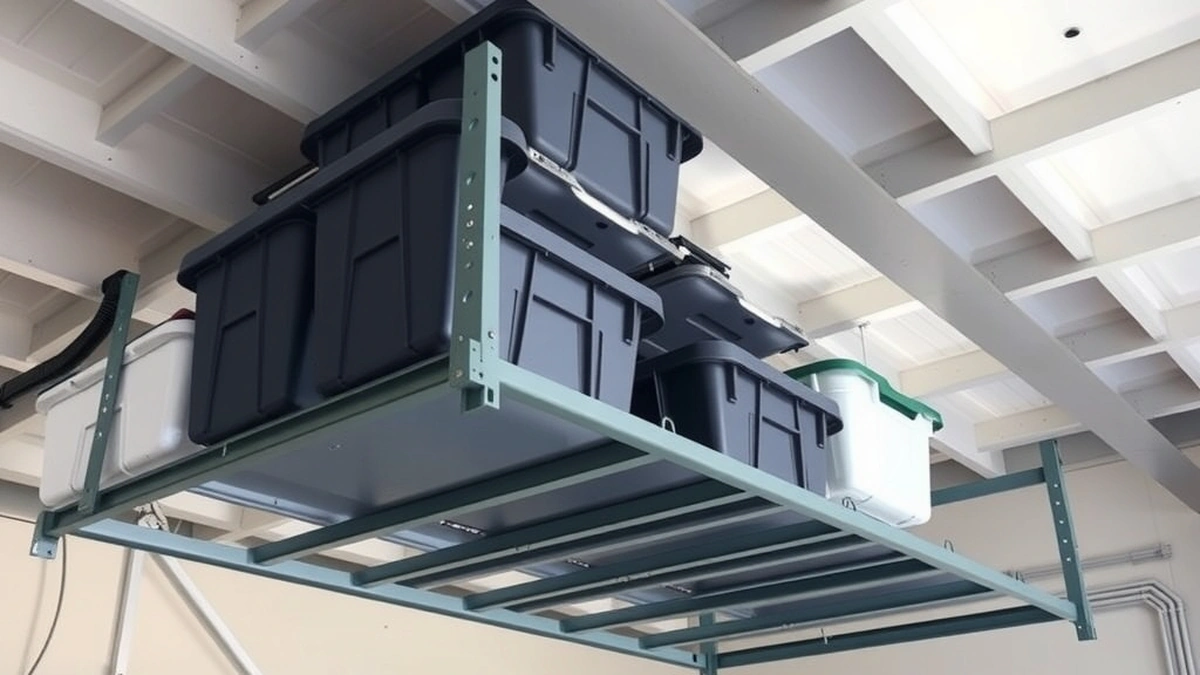
Garage attic storage uses the space above your garage ceiling for seasonal items. It is safe only when loads attach to joists or trusses, never drywall, and stay within posted weight limits.
- Best location
- Above garage ceiling, attached to joists or trusses
- Typical load limit
- 10–40 lbs per sq ft (varies by framing)
- Prohibited anchor
- Drywall or ceiling finish only
- Common uses
- Holiday decor, seasonal gear, rarely used tools
Some links on this page are affiliate links.If you buy through them we may earn a commission at no extra cost to you. We do not accept payment for rankings. Read the full disclosure.
Garage attic storage is the use of the unfinished space above your garage ceiling for holding boxes, bins, and seasonal gear. It works only when the storage system is anchored to ceiling joists or roof trusses and the total weight stays within the framing’s rated capacity. Never attach overhead loads to drywall or ceiling finish alone.
Start With the Ceiling and Joists
Before buying any rack or platform, inspect the garage ceiling structure. Most residential garages have either ceiling joists running the width of the space or roof trusses engineered to carry roof loads. The attic cavity between them may look like empty space, but it is not automatically rated for storage.
Check these measurements first:
- Joist or truss size (for example, 2x6 or 2x8)
- On-center spacing (commonly 16 inches or 24 inches)
- Clear span from wall to wall
- Species and grade of lumber, if visible
- Existing ceiling finish and whether it is load-bearing
Drywall is a finish material, not a structural member. Screwing a shelf or rack directly into drywall creates a collapse risk. All overhead storage hardware must bear on solid wood framing, ideally with blocking or ledger boards installed perpendicular to the joists where needed.
Calculate the Load Before You Store Anything
Garage ceiling live-load ratings vary by jurisdiction and original design. A common estimate for residential garage ceiling framing is 10 to 20 pounds per square foot, but your actual limit could be lower or higher. Treat this as an estimate until a builder or local building official confirms the number for your home.
Use this basic arithmetic to size your storage:
- Measure the platform area in square feet. A 4-foot by 8-foot sheet of plywood equals 32 square feet.
- Multiply by the rated pounds per square foot. At 15 pounds per square foot, 32 square feet supports 480 pounds total.
- Subtract the dead load of the platform itself. If the plywood and framing weigh 60 pounds, the remaining capacity is 420 pounds.
- Divide by the weight of your storage bins. If each bin weighs 15 pounds, you can store roughly 28 bins.
If you plan to store heavier items, reduce the square footage in use or add additional blocking and support. Do not guess at the math. Overloading ceiling framing can sag the drywall below, crack finishes, or in worst cases cause a partial ceiling collapse.
Choose the Right Attic Storage System
Products come second, after the structure is verified. Garage attic storage generally falls into three categories:
- Permanent attic platforms. Plywood or OSB decking screwed to joist blocking creates a flat storage surface. This works best when joists are accessible and the span is short enough to prevent deflection.
- Overhead garage storage racks. Metal racks hang from or bolt to ceiling joists and hold plastic bins off the floor. These are common in garages with limited attic headroom.
- Freestanding attic shelving. If the attic is accessible via a scuttle or pull-down stairs, standalone shelves can sit directly on joists without attaching to the ceiling finish.
When comparing options, look at weight capacity per rail or per shelf, not just the total rack rating. A rack rated for 600 pounds may distribute that weight across four attachment points, meaning each point carries 150 pounds plus the rack’s own weight.
Installation Basics
Installation should follow the manufacturer’s instructions and local building practices. Typical steps include:
- Mark joist locations with a stud finder or by measuring from a known edge.
- Pre-drill pilot holes to avoid splitting the lumber.
- Use lag screws or structural screws rated for shear and withdrawal, not drywall screws.
- Add cross-blocking between joists if the rack spans multiple bays.
- Level the platform before loading it.
- Leave clearance for garage door tracks, springs, and openers.
Do not cut, notch, or remove joists or truss members to make room for storage. Trusses in particular are engineered systems; cutting a single web member can reduce capacity across the whole assembly. If your garage has trusses, consult the truss manufacturer’s documentation or a structural professional before attaching heavy racks.
Cost Estimates
Material costs vary by system and region. The following figures are estimates only:
- Plywood platform materials: roughly $1.50 to $3.50 per square foot, depending on thickness and grade.
- Overhead metal storage rack: roughly $150 to $500 per unit, depending on size and weight rating.
- Structural screws and blocking lumber: roughly $30 to $80 for a typical two-bay installation.
For example, covering a 4-foot by 8-foot area with 3/4-inch plywood at $2.50 per square foot costs about $80 in materials. Adding a $250 overhead rack brings the total to approximately $330, not including fasteners or labor. If you hire a carpenter or handyman, labor could add several hundred dollars more.
What to Store and What to Avoid
Garage attic storage suits lightweight, infrequently used items. Good candidates include:
- Holiday decorations and lights
- Off-season clothing and bedding
- Camping and sports gear used once per year
- Spare paint cans in sealed containers, if temperature allows
- Duplicate tools kept for backup only
Avoid storing:
- Heavy power tools or tool chests
- Fluids, fuels, or chemicals that could leak through the ceiling
- Items sensitive to extreme heat or cold, since garage attics are usually unconditioned
- Anything irreplaceable, in case of a leak or structural issue
Temperature swings in an uninsulated garage attic can damage electronics, photos, and adhesives. If you store paper or fabric, use sealed plastic bins rather than cardboard, which can attract pests and absorb moisture.
Alternatives When the Attic Is Not Suitable
Not every garage ceiling can support attic storage. Low clearance, truss restrictions, or insufficient joist capacity may rule it out. In those cases, consider wall-mounted cabinets, freestanding shelving, or floor-based storage. You can compare fixed options in our guide to garage cabinets vs shelves, or browse wall systems in best garage wall organizer. For overhead-specific products, see best overhead garage storage.
If you are building new storage from scratch, diy garage storage covers framing and anchoring basics. For ceiling-specific questions, including finished versus unfinished surfaces, see garage ceiling types. Floor-level alternatives are detailed in garage floor storage.
Garage attic storage can reclaim useful space, but only when the structure supports it. Measure the joists, calculate the load, anchor to framing—not drywall—and keep heavy or hazardous items on the ground.
Frequently asked questions
What is garage attic storage?
It is the use of the unfinished attic or overhead cavity above a garage for storing boxes, bins, and seasonal items, typically supported by ceiling joists or roof trusses.
Can I screw shelves into garage ceiling drywall?
No. Drywall cannot support meaningful weight. Attach storage framing to joists or trusses, and verify capacity before loading anything overhead.
How much weight can garage attic joists hold?
It depends on joist size, spacing, span, and species. Many residential garage ceilings are rated around 10 to 20 pounds per square foot for live load, but a builder or inspector must confirm your specific framing.
What should I store in a garage attic?
Lightweight, infrequently used items such as holiday decorations, off-season clothing, and camping gear. Avoid heavy tools, fluids, or anything that could damage the ceiling if it falls.
Do I need a permit for overhead garage storage?
Often no for removable racks, but permanent structural changes or new attic flooring may require a permit. Check your local building department before cutting or modifying framing.
Where can I buy garage attic storage racks?
Overhead garage storage racks are sold by home improvement retailers and specialty brands such as Saferacks, Monkey Bars, and Gladiator GarageWorks.
Sources
Some links are affiliate links.If you buy through them we may earn a commission at no extra cost to you. We do not accept payment for rankings. Read the full disclosure.