
Storage Zones guides
Bikes, tools, seasonal gear, kayaks, and workbenches.
Measure the garage before you assign a zone
Most garage storage fails because it starts with a product instead of a measurement. A standard ceiling is 8 to 9 feet; a low ceiling is about 7 feet. Overhead racks typically drop 10 to 24 inches, which leaves little room above a door track that sits 6 feet 8 inches to 7 feet high. A car is 5 to 6 feet wide, so parking clearance and wall depth are fixed before you choose a rack or a bench.
Ceiling dead load is usually 10 to 20 pounds per square foot. That number decides whether you can store kayaks overhead or whether they belong on the floor. Never hang anything from drywall; fasten into ceiling joists or wall studs only.
The first decision is vertical zoning: what lives above the car, what lives on the walls, and what stays on the floor. Overhead space is best for lightweight, infrequently used items. Wall space works for tools and bikes you use weekly. Floor space is reserved for the car, the workbench, and heavy seasonal bins that exceed the overhead weight limit.
Bikes, kayaks, and seasonal bins: overhead versus wall versus floor
Bike storage hinges on ceiling height, bike weight, and ride frequency. A wall mount keeps a 30- to 50-pound bike at floor level and easy to grab. A pulley lift works best with an 8- to 9-foot ceiling and a bike under 40 pounds, but it adds steps before every ride. E-bikes often exceed 60 pounds, so they usually need a floor rack or a reinforced wall mount rather than an overhead system.
Kayak storage compares hull support against ceiling height and car clearance. Ceiling slings suspend the hull above the car, but they require joist mounting and enough drop to clear the door track. Wall cradles keep the kayak visible and accessible, consuming roughly 2 to 3 feet of wall width per boat. Floor racks avoid ceiling limits entirely but sacrifice parking space in a one-car garage.
Seasonal bins follow an access order. Holiday decor used once a year can ride overhead near the dead-load limit if packed in rigid containers under 50 pounds each. Bins you reach monthly belong on wall shelves or a bench, not above the car. The table below shows the trade-offs by zone.
| Zone | Best for | Height limit | Weight caution | Main trade-off |
|---|---|---|---|---|
| Overhead rack | Seasonal bins, lightweight kayaks | 8–9 ft standard ceiling; 10–24 in rack drop | 10–20 psf dead load; never drywall | Hard to reach; reduces door clearance |
| Wall mount | Bikes, tools, cradled kayaks | Stud mounting only; above door track when possible | Bike 30–60 lb; kayak hull weight distributed | Consumes wall width; blocks panel access |
| Floor rack | E-bikes, heavy bins, workbench overflow | No ceiling limit; keep 5–6 ft car width clear | Floor load, not ceiling dead load | Takes parking or bench space |
Tool storage and the workbench: earning floor space
A workbench only earns its footprint if the height, depth, light, and power match the work. Standard bench height is 34 to 38 inches; depth is usually 24 to 30 inches. If the bench blocks the door track or narrows the car path below 5 feet, it is too deep or poorly placed.
Tool chests and roll cabs offer security and mobility but consume floor space every day. Wall rails and pegboard keep hand tools visible and off the bench, freeing the surface for projects. Drawers inside a cabinet protect precision tools from dust and garage temperature swings, but they cost more than open rails and require stud mounting.
The decision is usually mobility versus security. A roll cab moves to the car or the driveway, but it locks less securely than a bolted cabinet. A wall rail system costs less and uses vertical space, yet it leaves tools exposed. Choose the bench first, then fit storage around its measured depth and the location of outlets and overhead light.
Will an overhead rack hit my garage door?
Measure from the floor to the door track, which sits 6 feet 8 inches to 7 feet high. Subtract the rack drop of 10 to 24 inches and confirm the loaded rack stays below that line with the door fully open.
Can I hang a kayak from the ceiling in a 7-foot garage?
Only if the joists, not the drywall, carry the weight and the kayak clears the door track. In a 7-foot low ceiling, wall cradles or floor racks are usually the safer fit.
How much can I store overhead without exceeding the dead load?
Plan for 10 to 20 pounds per square foot, distributed across joists. Weigh packed bins before lifting them; a single 60-pound bin can overload a small joist bay if the weight is concentrated.
Garage tool storage systems How to store bikes in a garage Kayak storage in a garageAll storage zones guides

Storing holiday decor in a garage
How to keep holiday bins, trees, and lights dry, pest-free, and under the overhead weight limit, with a container table and a workable access order.
Read the guide →
Kayak storage in a garage
Ceiling slings, wall cradles, and floor racks compared by hull support, ceiling height, car clearance, and cost, with the measurements to take first.
Read the guide →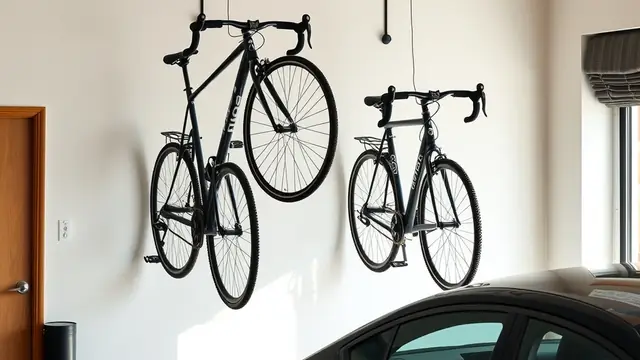
How to store bikes in a garage
Hanging, wall mounts, floor racks, and pulley lifts compared by ceiling height, bike weight, and how often you ride. E-bikes need their own plan.
Read the guide →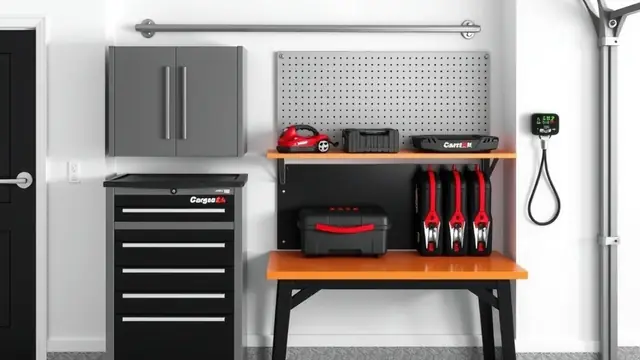
Garage tool storage systems
Tool chests, cabinets, wall rails, and roll cabs compared on footprint, security, mobility, and the floor space your garage actually has.
Read the guide →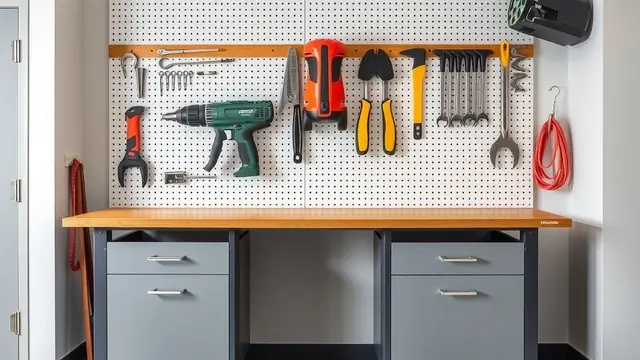
Workbench storage and tool walls
Bench height, depth, pegboard, drawers, light, and power: the measurements that decide whether a workbench earns its floor space.
Read the guide →