Garage storage for low ceilings
A 7- or 8-foot ceiling still holds plenty. Here is the clearance math, the low-profile hardware worth buying, and what never goes overhead.
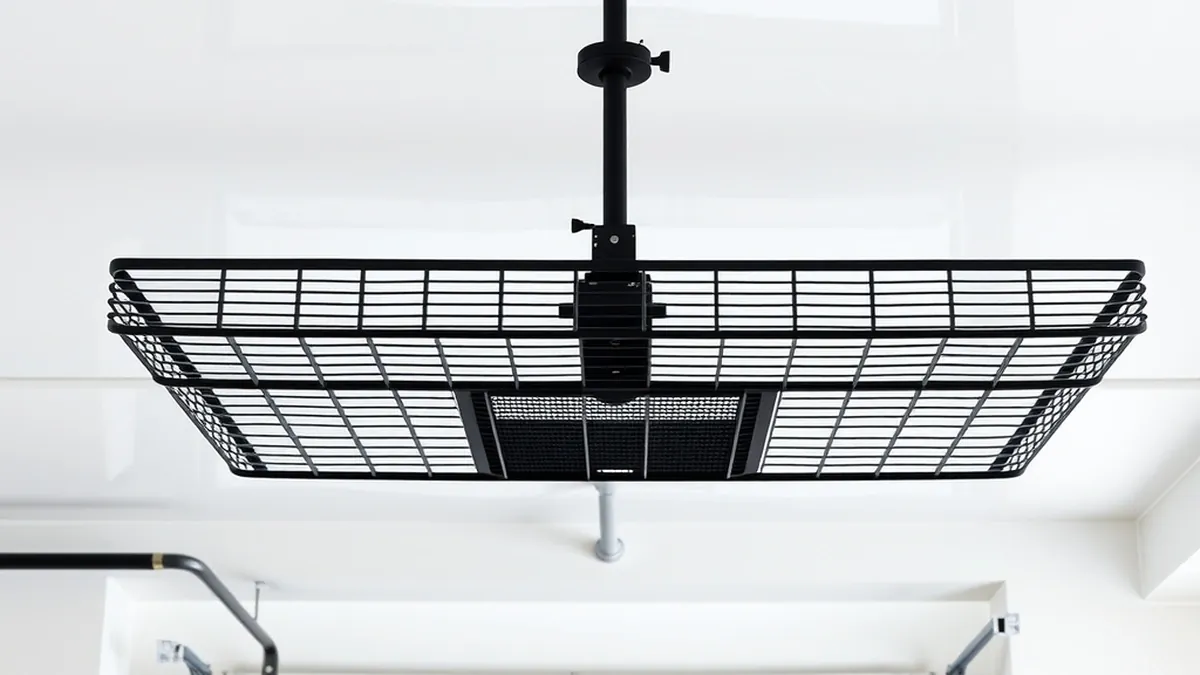
At 7 feet, a ceiling rack leaves about 6 feet of headroom, so it works over the car rather than a walkway. Wall rails, 72-inch cabinets, and shallow side-wall shelves return more usable storage per dollar.
- Low ceiling
- 7–8 ft finished height
- Typical rack drop
- 10–12 in at 7 ft, 12–16 in at 8 ft
- Headroom target
- 6 ft 6 in over a walking path
- Best first buy
- Wall rail plus an 18–24 in deep cabinet
Some links on this page are affiliate links.If you buy through them we may earn a commission at no extra cost to you. We do not accept payment for rankings. Read the full disclosure.
A low ceiling does not rule out overhead storage. It rules out deep overhead storage, and it moves most of the usable volume from the ceiling to the walls. The arithmetic below shows how much drop your ceiling can take.
For this guide, a low ceiling means a finished height of 7 to 8 feet. A standard garage ceiling is 8 to 9 feet, and 10 feet and above is a high bay with room for two tiers.
Why 7 feet changes the plan
Seven feet is 84 inches. Subtract a 12-inch rack and you have 72 inches, or 6 feet, from the floor to the bottom of the load. A person who is 5 feet 10 inches tall has 2 inches of clearance. That is not a walkway; it is a storage zone you walk around.
At 8 feet, the same rack leaves 7 feet, enough for a walkway. That 12 inches is why the two ceilings behave so differently.
The car adds a second constraint. Most cars are 5 to 6 feet tall. Add 6 inches for the antenna or roof rack. At 7 feet, a 12-inch rack over the hood leaves about 6 feet. A 5-foot-6-inch car with a folded antenna just fits; add 6 inches for a roof rack and the margin is gone. Measure the car, not the spec sheet. A lifted truck does not fit.
The clearance math, by ceiling height
The table assumes a flat ceiling and a rack hung directly below it. Clearance is subtraction, not a structural rating. The rack label and your joists set the weight; how much weight overhead storage holds covers that side.
| Ceiling height | Sensible rack drop | Clearance below | Where it works |
|---|---|---|---|
| 7 ft | 10–12 in | 6 ft 0 in–6 ft 2 in | Over the car only; shallow bins and seasonal gear |
| 8 ft | 12–16 in | 6 ft 8 in–7 ft 0 in | Over the car or a rear walkway |
| 9 ft | 16–24 in | 7 ft 0 in–7 ft 8 in | Walkway plus car bay |
| 10–12 ft | 24–36 in | 7 ft 0 in and up | Two tiers or deep racks |
Read the table from right to left. If the last column says over the car, the rack cannot cross a walking path, and the layout should follow the car’s footprint rather than the room’s shape. A rack that spans the whole bay at 7 feet turns a two-car garage into a tunnel.
Low-profile hardware that earns its space
Three formats are worth measuring before you buy anything.
A deck rack with a 10- to 12-inch drop uses two or four brackets and a wire or steel deck. The load sits in the deck, so shallow bins slide in and out without catching.
A suspended shelf with a 12-inch profile runs along a side wall and holds paint, winter gear, and small totes without crossing the bay. It is the least disruptive option at 7 feet because it does not hang over the car.
A ceiling track that accepts bins directly is the lowest-profile option of all. The bin becomes the container and the lid keeps dust out. The track still has to be anchored into joists.
One warning: a rack sold as low-profile may still hang 18 inches once assembled. The number that matters is the distance from the ceiling to the lowest point of the loaded rack, not the height of the bare frame.
Why the wall usually wins
Do the volume arithmetic before you buy hardware. An 8-foot run of 24-inch-deep cabinets, 6 feet tall, holds about 96 cubic feet (8 × 2 × 6). A 4 × 8 ft ceiling rack with a 12-inch drop holds about 32 cubic feet (4 × 8 × 1). The cabinet run holds three times as much, and the shelves sit at eye level.
That comparison is unfair to the rack, which uses space that was doing nothing. But at 7 feet the rack also uses the only space you walk through. Wall storage adds volume without lowering the ceiling.
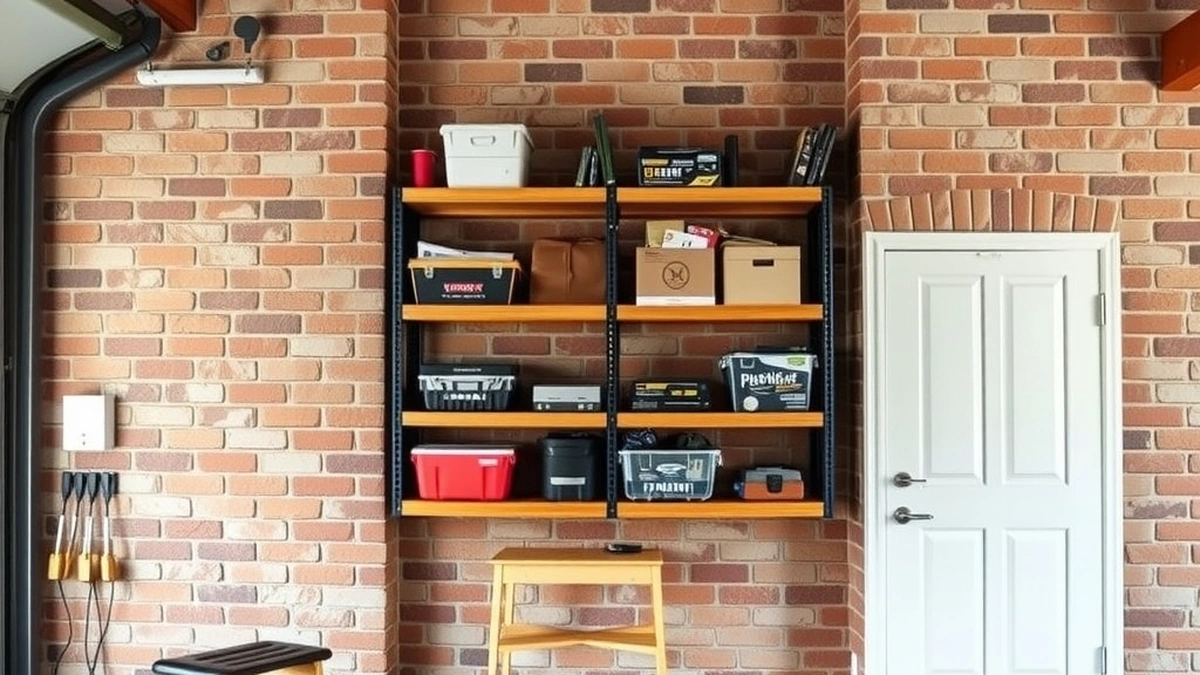
For the full menu of rails, panels, and cabinets, see garage wall storage ideas that scale.
Wall rails and the 18-inch rule
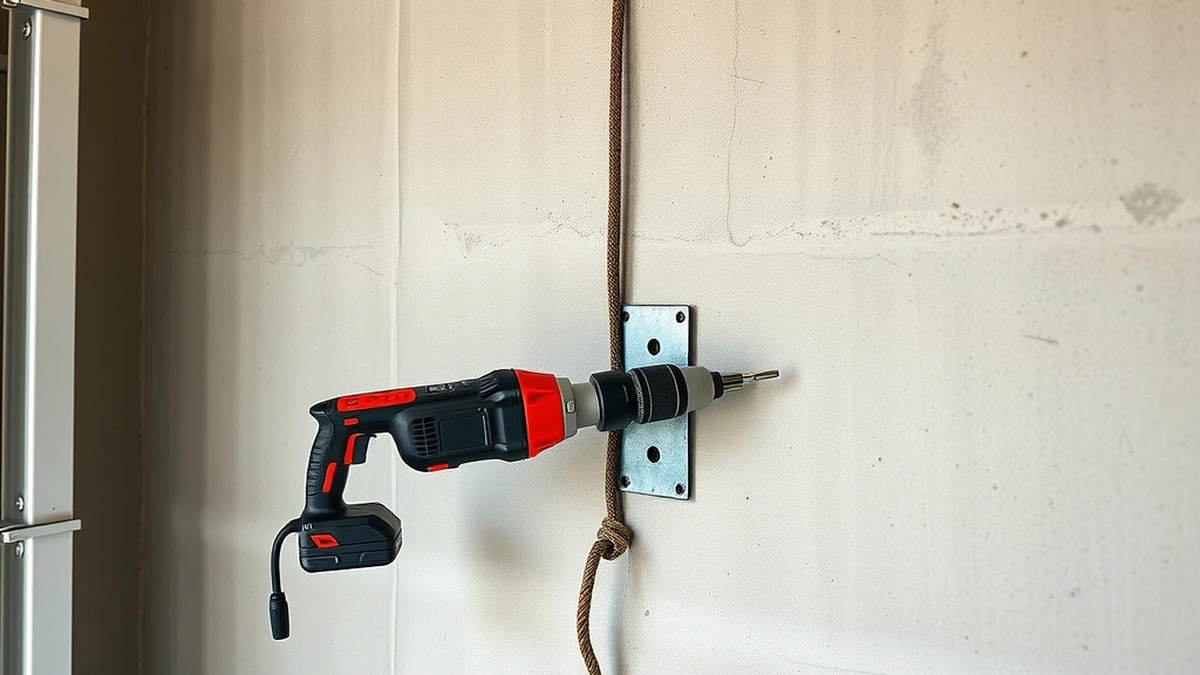
A wall rail is a horizontal channel, usually 1 to 3 inches deep, screwed into studs and fitted with hooks. The rail itself holds very little; the hooks carry the load, and each has a published limit.
Keep the rail at 5 to 6 feet so you can reach the hooks without a ladder, and keep an 18-inch strip of floor clear beneath it so a car door can open. On a 12-foot-wide garage, a 2-inch rail costs less width than a 12-inch shelf.
Floor cabinets and the top gap
Tall cabinets are the natural partner to a low ceiling. A 72-inch cabinet leaves 12 inches of dust space under a 7-foot ceiling; an 80-inch cabinet leaves 4 inches. On an 8-foot ceiling, a 90-inch unit leaves 6 inches and blocks its own top door.
Depth is the trade. A 24-inch base cabinet eats 2 feet of parking width along the side wall. In a 12-foot garage with a 9-foot door, the strip beside the door is 18 inches, so a 24-inch cabinet does not fit and the car door has no room to open. An 18-inch locker or a 12-inch shelf is often the better fit. The small-garage layout guide works through those widths in detail.
Door track, opener, and the path of the door
Measure the garage door before you measure the ceiling. The horizontal track usually sits 6 feet 8 inches to 7 feet above the floor, and the opener rail hangs near the center of the bay. Storage that crosses either one will be hit by the door or will block the opener’s travel.
Keep at least 6 inches of clear space around the track and the opener rail, and never store anything in the door’s path. On a low ceiling the top panel also swings inward, so a rack 12 inches below the ceiling at the door end can foul the panel even when the track looks clear.
What not to hang
Some loads do not belong overhead at 7 feet, even when the rack is rated for the weight.
- Bikes over a car. A 30-pound bike dropped from 7 feet lands on a hood. Use a wall mount at 6 feet or a floor rack instead.
- Ladders stored flat overhead. Re-hanging a 6- to 8-foot ladder above head height is a two-person job most owners postpone.
- Any tote you cannot lift with both hands at shoulder height. The risk is the lift, not the rack.
- Anything anchored only into drywall. Drywall has almost no pull-out strength, and a 50-pound tote on toggle bolts can find the floor.
- Long items such as kayaks or lumber that block light or cross the door path.
Keep the area in front of the electrical panel and around the water heater clear. Those clearances are set by code and by the appliance label, and storage tends to migrate into them first.
The short version
At 7 feet, plan on wall rails, 72- to 80-inch cabinets, and one shallow rack over the car. At 8 feet, a 12- to 16-inch rack can cross a walkway. At 9 feet or more, the height constraint loosens and the joist capacity becomes the limiting factor.
Measure the finished ceiling, the door track, and the tallest car before you buy. The garage storage cost guide gives budget ranges for rails, cabinets, and racks, so you can compare the three options on more than height.
How to do it
- Measure the finished ceilingMeasure floor to drywall, not floor to joist. A 7-foot ceiling is 84 inches, and every later number comes from that.
- Measure the door track and openerNote the height of the horizontal track and the position of the opener rail. Storage cannot cross either one.
- Measure the tallest carAdd 6 inches to the published height for the antenna, a roof rack, or an open hatch.
- Choose the zoneDecide whether the rack sits over the car or over a walkway. At 7 feet it can only be over the car.
- Buy hardware rated for the loadMatch the rack rating to the load and anchor it into joists with the fasteners the manufacturer specifies.
Frequently asked questions
Can I put overhead storage in a garage with a 7-foot ceiling?
Yes, but only over the car or along a wall you do not walk through. A 12-inch rack at 7 feet leaves 6 feet of clearance, which is too low for a walkway.
How much headroom should I leave under a garage rack?
Aim for 6 feet 6 inches over any path you walk. If the ceiling cannot give you that, move the storage to the wall instead of shrinking the walkway.
Are low-profile overhead racks safe?
They are safe when the brackets are anchored into joists and the load stays under the published rating. The low profile changes the height, not the structural rules.
What is the best storage for a garage with a low ceiling?
A wall rail at 5 to 6 feet, a run of 72- to 80-inch cabinets, and one shallow shelf over the car. These use vertical wall space without lowering the ceiling over a walkway.
Can I hang a bike from a 7-foot garage ceiling?
You can, but the bike will hang about 5 feet down and leave roughly 2 feet of floor clearance. A wall mount at 6 feet is easier to load and does not block the bay.
How close can storage sit to the garage door track?
Leave at least 6 inches of clear space around the track and the opener rail, and keep the door's travel path empty. The top panel swings inward as the door opens.
Sources
Some links are affiliate links.If you buy through them we may earn a commission at no extra cost to you. We do not accept payment for rankings. Read the full disclosure.