
Compare guides
Wall systems, cabinets, and racks head to head.
Wall Storage: Slatwall, Track, and Pegboard by the Numbers
Start with the wall, not the floor. A standard residential ceiling is 8 to 9 feet; low ceilings are about 7 feet. Overhead door tracks sit at 6 feet 8 inches to 7 feet, and a typical car is 5 to 6 feet wide. That leaves a narrow vertical band above the door and along the perimeter walls. Never hang heavy storage from drywall alone; fasten into studs or blocking, or use a rail system that spreads the load across multiple studs.
Pegboard is the cheapest entry point, often under $2 per square foot, but hooks typically top out around 10 to 15 pounds each and the board can sag under concentrated weight. Slatwall costs more per square foot—commonly $4 to $8 installed—and PVC versions resist garage damp better than MDF. A quality slatwall hook can hold 25 to 75 pounds depending on stud spacing and hook design. Track systems such as Rubbermaid FastTrack use a steel rail rated to 1,750 pounds, while composite channels like Gladiator GearTrack are rated around 75 pounds per linear foot. The trade-off is reconfiguration versus raw capacity: pegboard moves freely, slatwall and track require removing hooks to relocate them, but they carry heavier tools without pulling out of the wall.
Slatwall vs pegboard covers cost per square foot, load, dust, and installation in detail.
Cabinets vs Open Shelves: Load, Cost, and Floor Space
Cabinets control dust and lock tools away, but you pay for the enclosure. Basic steel or resin cabinets often run $200 to $600 per unit, while heavy-duty modular lines with 18-gauge steel, full-extension drawers, and 5- to 10-year warranties can exceed $1,500 per cabinet. Open shelves hold more per dollar—simple 12-inch-deep shelving can cost under $100 per 6-foot run and frequently carries 250 to 500 pounds per shelf when anchored to studs. The penalty is exposure: dust settles on tools, and nothing is locked.
Floor space is the hidden variable. A 24-inch-deep cabinet consumes the same footprint whether the door is open or closed, and in a 20- to 24-foot-deep garage that depth matters when you need to walk around a car. Shelves can be shallower—12 to 16 inches—and still hold bins, fluids, and boxes. If you store valuables or want a finished look, cabinets win. If you want maximum load per dollar and easy visibility, shelves win.
Garage cabinets vs shelves compares cost, load, floor space, installation, and resale.
Overhead Racks and Ceiling Limits
Overhead racks use the volume above the car, but ceiling capacity is strict. Residential ceiling dead load is typically 10 to 20 pounds per square foot, and that total includes insulation, wiring, and anything already stored up there. Rack drop ranges from 10 to 24 inches, so on a 7-foot-low ceiling you lose headroom quickly; on an 8- to 9-foot standard ceiling, a 24-inch drop still leaves roughly 6 feet of clearance above the stored load, which works for most cars but leaves little margin for tall SUVs or roof racks.
| System | Typical Load Rating | Relative Cost | Best For |
|---|---|---|---|
| Pegboard | 10–15 lb per hook | $ | Light hand tools, frequent reconfiguration |
| Slatwall | 25–75 lb per hook | $$ | Medium tools, damp-resistant wall storage |
| Steel track | Up to 1,750 lb per rail | $$$ | Heavy bins, ladders, long-term fixed layout |
| Composite track | ~75 lb per linear foot | $$ | Moderate loads, easier DIY installation |
| Overhead rack | 300–600 lb per section | $$–$$$ | Seasonal items, ceiling joist mounting only |
Mount overhead racks into ceiling joists, not drywall, and verify joist spacing and direction before buying. A 4-by-8-foot rack loaded to 500 pounds concentrates significant weight on a small framing area, so spread the load across multiple joists or consult a framing-capable professional if you are unsure.
NewAge vs Husky garage cabinets details gauge, assembly, drawers, load, warranty, and price if you decide enclosed storage is worth the premium.
Frequently Asked Questions
Can I hang a slatwall or overhead rack from drywall?
No. Never hang from drywall. Fasten wall systems into studs or blocking, and mount overhead racks into ceiling joists. Drywall alone cannot support the concentrated loads of tools, bins, or seasonal storage.
How much ceiling clearance do I need for an overhead rack?
Standard ceilings are 8 to 9 feet; low ceilings are about 7 feet. With a rack drop of 10 to 24 inches, verify that you still have enough clearance for your car and any roof cargo before installation.
Do cabinets hold more weight than shelves?
Not necessarily. Shelves often hold more per dollar and can carry 250 to 500 pounds per shelf when properly anchored. Cabinets cost more because you are paying for dust control, security, and appearance, not necessarily higher load capacity.
All compare guides
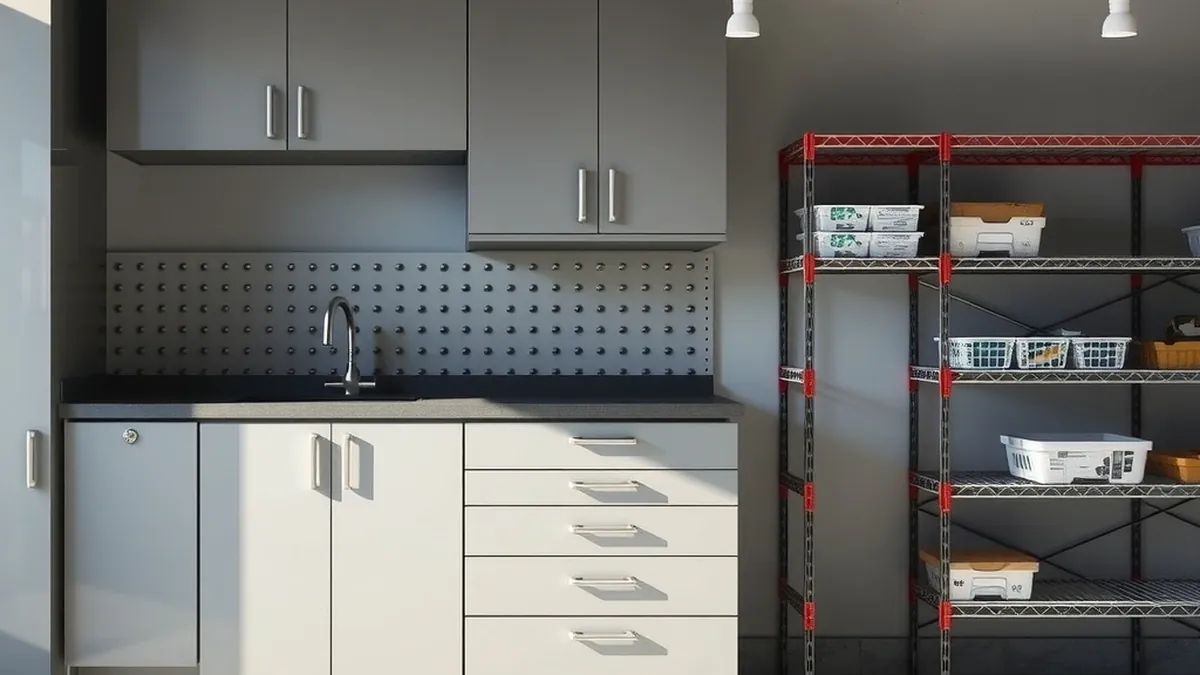
Garage cabinets vs shelves
Cabinets control dust and lock tools away; shelves hold more per dollar. Compare cost, load, floor space, installation, and resale for a real garage.
Read the guide →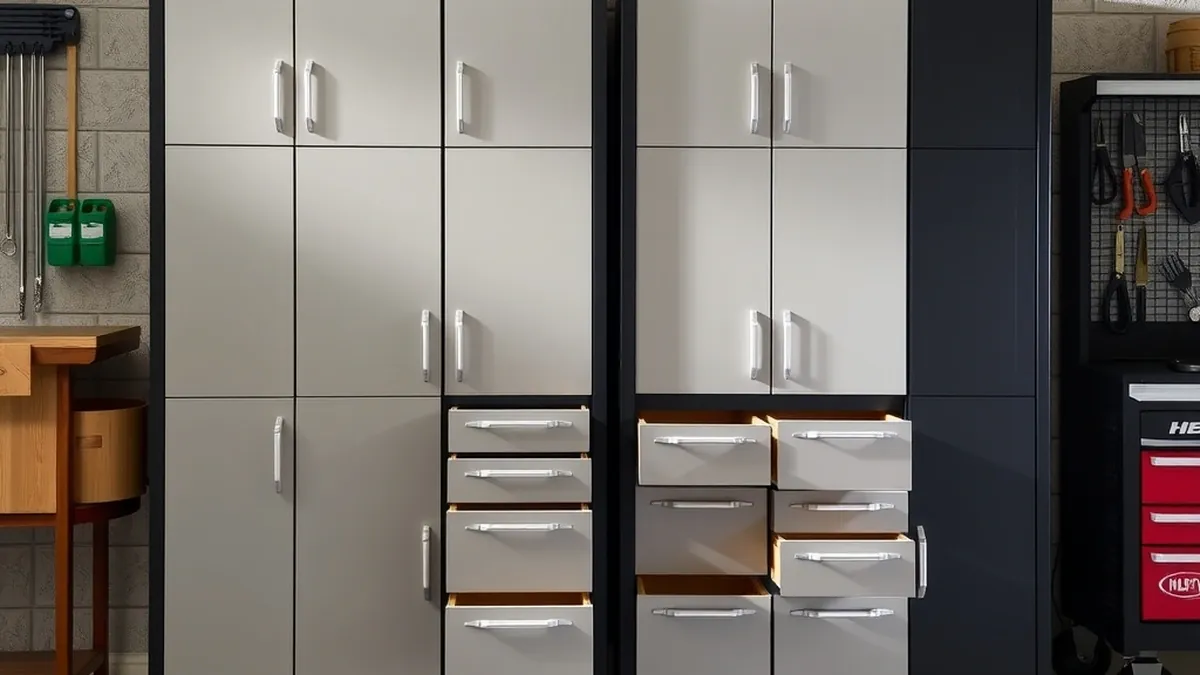
NewAge vs Husky garage cabinets
A spec-level comparison of NewAge Bold and Pro against Husky Regular, Heavy Duty, and Pro Duty: gauge, assembly, drawers, load, warranty, and price.
Read the guide →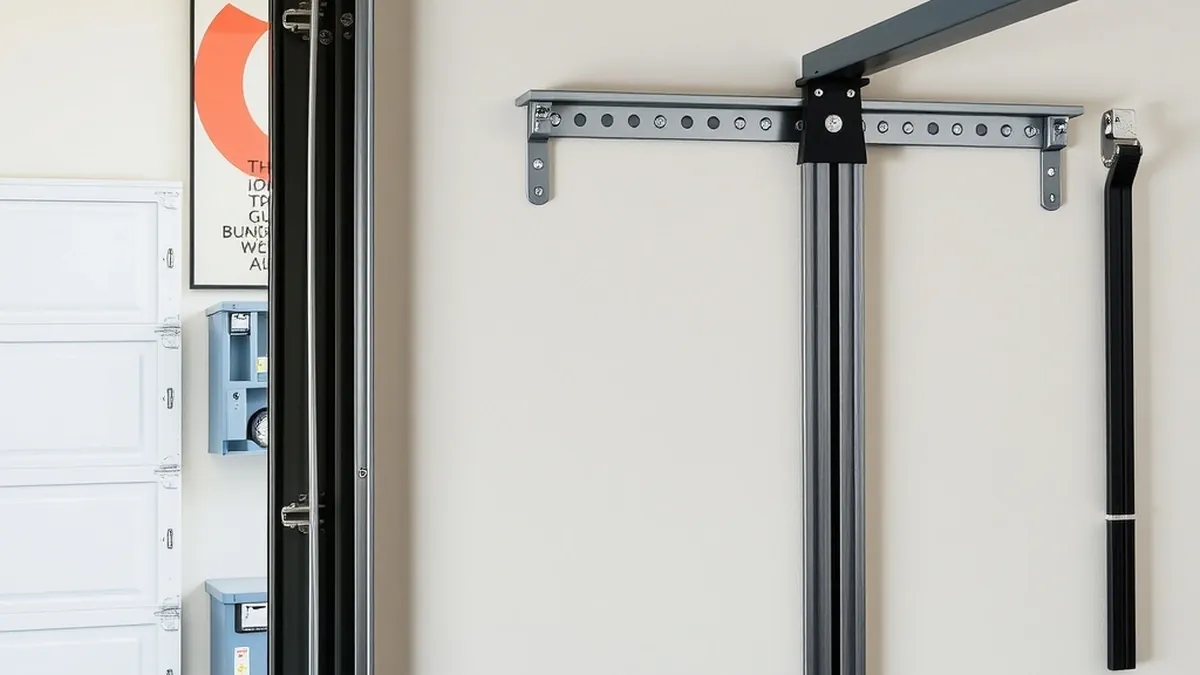
Rubbermaid FastTrack vs Gladiator
FastTrack uses a steel rail rated to 1,750 lb; Gladiator GearTrack uses composite channels rated 75 lb per linear foot. Compare hooks, cost, and warranty.
Read the guide →
Slatwall vs pegboard
Slatwall holds more per hook and PVC resists damp; pegboard costs less and reconfigures freely. Compare cost per square foot, load, dust, and installation.
Read the guide →