Garage cabinets vs shelves
Cabinets control dust and lock tools away; shelves hold more per dollar. Compare cost, load, floor space, installation, and resale for a real garage.
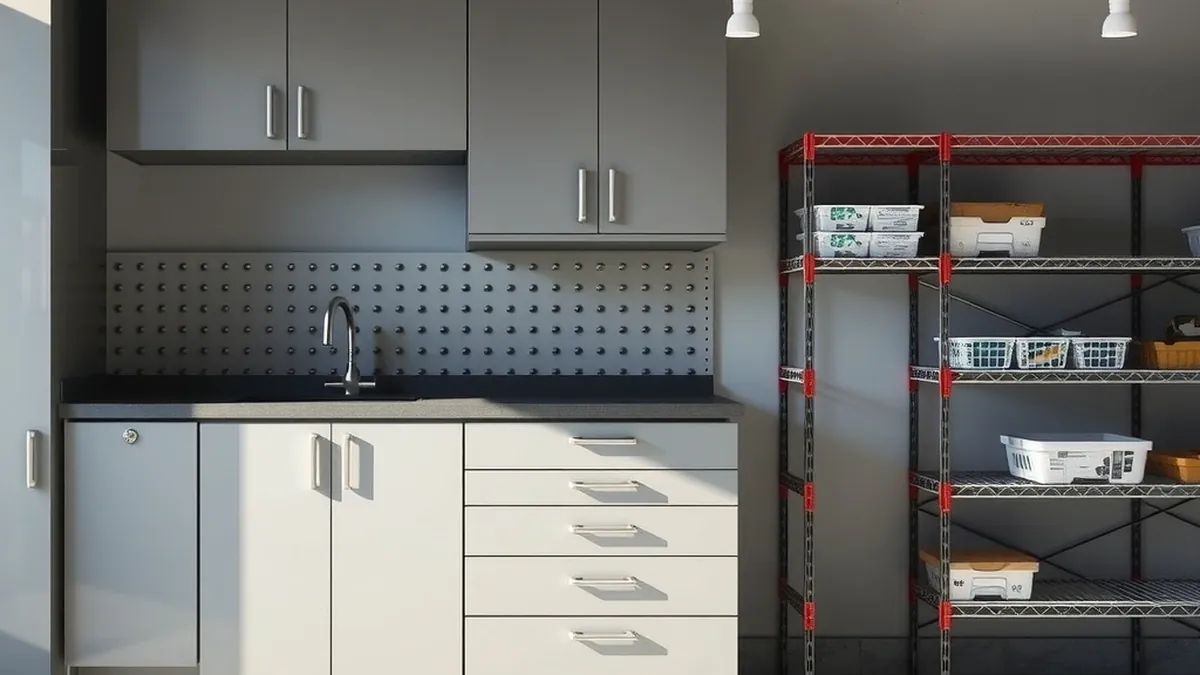
Cabinets are the better choice for tools, valuables, and anything you want dust-free or locked. Shelves win on cost per cubic foot and bulky bins. A 12-foot wall works best with cabinets below 6 feet and shelves above.
- Best for valuables
- Locked steel cabinets
- Best for bulk
- Heavy-duty open shelving
- Typical cost
- Cabinets $120–$400 per linear ft; shelves $40–$100
- Load per shelf
- Shelves are usually higher; check the published rating
- Floor depth
- Cabinets 18–24 in; shelves 16–24 in
Some links on this page are affiliate links.If you buy through them we may earn a commission at no extra cost to you. We do not accept payment for rankings. Read the full disclosure.
| Cabinets | Shelves | |
|---|---|---|
| Upfront cost | $120–$400 per linear ft, typical estimate | $40–$100 per linear ft, typical estimate |
| Dust | Doors keep most dust off the contents | Open decks collect dust on every surface |
| Security | Most steel units have keyed locks | Open unless you add a locking cage |
| Load | Commonly 50–150 lb per shelf; check the label | Usually the higher capacity per shelf |
| Floor space | 18–24 in deep; doors need swing room | 16–24 in deep; no door swing |
| Installation and resale | Assembly takes longer; reads built-in | Fast to install; reads utility |
Cabinets and shelves are not competing versions of the same product. Cabinets enclose storage behind doors; shelves put it on a frame you can see and reach. The right choice depends on whether you are protecting tools from dust and theft or trying to hold the maximum number of bulky bins for the lowest cost.
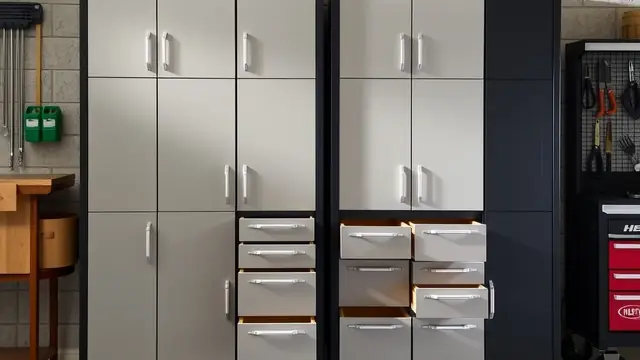
Garage cabinets are enclosed units with doors, shelves, and often locks. Garage shelving is an open frame with decks, brackets, or wire shelves.
The real difference is what you want to protect
A cabinet is an envelope. It controls dust, hides clutter, and gives you a flat face to walk past. A shelf is a surface. It gives you access from three sides, holds irregular shapes, and costs less because there are no doors, hinges, or finished panels.
Most working garages end up with both. The usual arrangement is cabinets from the floor to about 6 feet, where doors and drawers are easy to reach, and open shelves above that for bins you touch twice a year. The split works because the expensive hardware stays at hand height and the cheap storage goes where a ladder already lives.
The mistake is choosing one system for the whole wall. A wall of closed cabinets looks calm, but every bulky cooler and holiday tote still needs a home. A wall of open shelves holds everything, but you will look at it every day.
Cost: run the numbers for a 12-foot wall
Cabinets are usually priced per unit, not per foot, so convert before comparing. A 36-inch steel cabinet at $300 works out to about $100 per linear foot. A welded three-piece set at $700 for 54 inches is about $155 per linear foot. A premium installed run can reach $300 to $400 per linear foot.
Shelving is simpler. A 4-foot unit at $150 is about $37.50 per linear foot. Heavy-duty units with thicker posts and particleboard decks land around $60 to $100 per linear foot. For a 12-foot wall, that is roughly $450 to $1,200 in shelving, versus $1,200 to $4,800 in cabinets.
The gap narrows when you count what the cabinet replaces. Doors hide the contents, so you may skip decorative bins. Shelves usually need bins, and good bins are not free. See /garage-storage-cost/ for a fuller budget breakdown.
Dust and moisture
Doors keep most airborne dust off the contents. That matters in a garage, where concrete dust, road grit, and lawn debris settle on every horizontal surface. Open shelves collect that film on the top of every bin, and the dust migrates into the bin every time you open it.
Cabinets are not sealed boxes. Air moves through door gaps and hinge cutouts. If your garage is very dusty, add a foam gasket to the door stop and keep paper, fabric, and electronics in closed bins inside the cabinet.
Moisture is the bigger issue. A steel cabinet pushed tight against a cold concrete wall can trap humid air and rust tools. Leave an inch or two of air space, and do not store anything that must stay dry directly against the slab. Shelves have more airflow but no protection from a leaking roof or a wet car. Neither system fixes a drainage problem.
Security: locks are a speed bump
Most steel garage cabinets include a keyed lock. That is enough to keep children, visitors, and casual hands away from chemicals, power tools, and expensive batteries. It is not a safe. A determined thief can pry a light-gauge door or carry off a small cabinet.
Shelves have no security unless you build a cage around them. If your tools are valuable, put the locked cabinet in the most visible corner and anchor it to the studs. A locked cabinet that can be tipped over is a hazard, not a security measure.
Do not store propane, gasoline, or solvent-soaked rags in a closed cabinet. Ventilation matters more than concealment for those items. Check local fire codes before building a chemical cabinet.
Load: shelves usually win, cabinets need a number
Cabinet shelf ratings vary widely. Many residential steel cabinets publish something in the range of 50 to 150 pounds per shelf, but the number depends on the shelf material, the bracket design, and how the load is distributed. That range is an estimate across the category, not a rating for a specific cabinet. Ask for the per-shelf figure before you buy.
Shelving generally carries more. A bolted steel unit with a thick deck can hold several hundred pounds per shelf, and heavy-duty garage racks go higher. The weak point is often the deck, the bracket, or the anchor, not the upright. Load the bottom shelf first and keep dense items low.
A cabinet is better for dense small items because the shelf spans are shorter and the contents cannot slide off. A shelf is better for a 50-pound cooler or a stack of totes. Neither one should be loaded past its label, and neither should be hung from drywall alone. Anchor into studs or a rated structure; consult a professional if you are unsure what the wall or ceiling can take.
Floor space and access
Cabinets are commonly 18 to 24 inches deep. Shelves run 16 to 24 inches. The cabinet’s real footprint includes its door swing, typically 18 to 24 inches in front. A shelf has no swing, but you still need standing room to reach the back.
Measure the car door opening before you commit. A 24-inch-deep cabinet beside a parking bay can turn a comfortable exit into a squeeze. In a one-car garage, shallow 18-inch cabinets on the side wall often work better than deep shelves on the back wall.
Leave at least 30 to 36 inches of aisle where you walk. If the garage also holds a workbench, measure the space between the bench and the car, not just the wall length. See /garage-storage-small-garages/ for layouts that keep a car inside.
Installation and resale
Flat-pack cabinets take one to three hours each, depending on size and how square the floor is. Assembled cabinets arrive heavier and cost more, but they save a weekend. Shelving is usually 30 to 60 minutes per unit. Both need two people once the unit is taller than chest height.
Anchor tall units to studs. Level the base with shims or leveling feet; garage slabs slope toward the door. Do not block the electrical panel, and keep cabinets away from the furnace or water heater clearances. Add an outlet only through a licensed electrician.
Cabinets read as built-in storage and can make a garage feel finished. Shelves read as utility. That difference may matter at resale, but it is not a guaranteed return. Buy the system that fits the way you use the space. For product-level comparisons, see /best-garage-cabinets/ and /best-garage-shelving/.
The decision list
- Choose cabinets if you need dust control, locked storage, or a finished wall.
- Choose shelves if you need the most cubic feet per dollar and mostly store bins.
- Combine them when the wall is long enough: cabinets low, shelves high.
- Ask for the per-shelf load rating, not just the total cabinet capacity.
- Measure door swing, car clearance, and aisle width before ordering.
- Anchor tall units to studs and keep heavy loads low.
The short version: cabinets protect, shelves store. A 12-foot wall with both usually beats either system alone, and the load label matters more than the finish.
Frequently asked questions
Are garage cabinets or shelves cheaper?
Shelves are cheaper per linear foot in almost every case. A basic 4-foot shelving unit can cost less than a single base cabinet, but it offers no doors, no lock, and no finished face. Compare cost per cubic foot of usable storage, not just the sticker price.
Can I put heavy storage bins on wire shelves?
Only within the shelf's published limit. Wire shelves concentrate load at the wire and can deflect or pull out of their brackets. Put heavy bins on the bottom shelf, spread the weight, and check the manufacturer's per-shelf rating before loading.
Do garage cabinets keep dust out?
Doors reduce dust on the contents but do not seal the cabinet. Hinges and door gaps still pass air. If dust is severe, add a gasket, keep the cabinet off a damp concrete wall, and use closed bins inside for paper and fabric.
Which option is better for a small garage?
Cabinets usually win in a small garage because they use the wall vertically and hide clutter behind a flat face. Shallow 18-inch cabinets leave more aisle than 24-inch shelves. If the floor is tight, combine one tall cabinet with one narrow shelf above the car.
Do I need to anchor cabinets and shelves to the wall?
Tall cabinets should be anchored to studs, and tall shelving should be restrained against tipping. Anchoring is not optional in a garage where doors, cars, and children move through the space. Use the manufacturer's bracket and fasteners, and anchor into studs or a rated wall structure.
Will cabinets improve garage resale value?
A clean, well-installed cabinet run can make a garage feel finished and may help a buyer see usable space. A shelf unit rarely changes a sale price on its own. Neither is a guaranteed return, so choose the system you will use rather than the one you think a buyer wants.
Sources
Some links are affiliate links.If you buy through them we may earn a commission at no extra cost to you. We do not accept payment for rankings. Read the full disclosure.