Concrete Wall Anchors for Garage Storage
How to choose and install concrete wall anchors for garage shelving, cabinets, and overhead storage without damaging masonry.
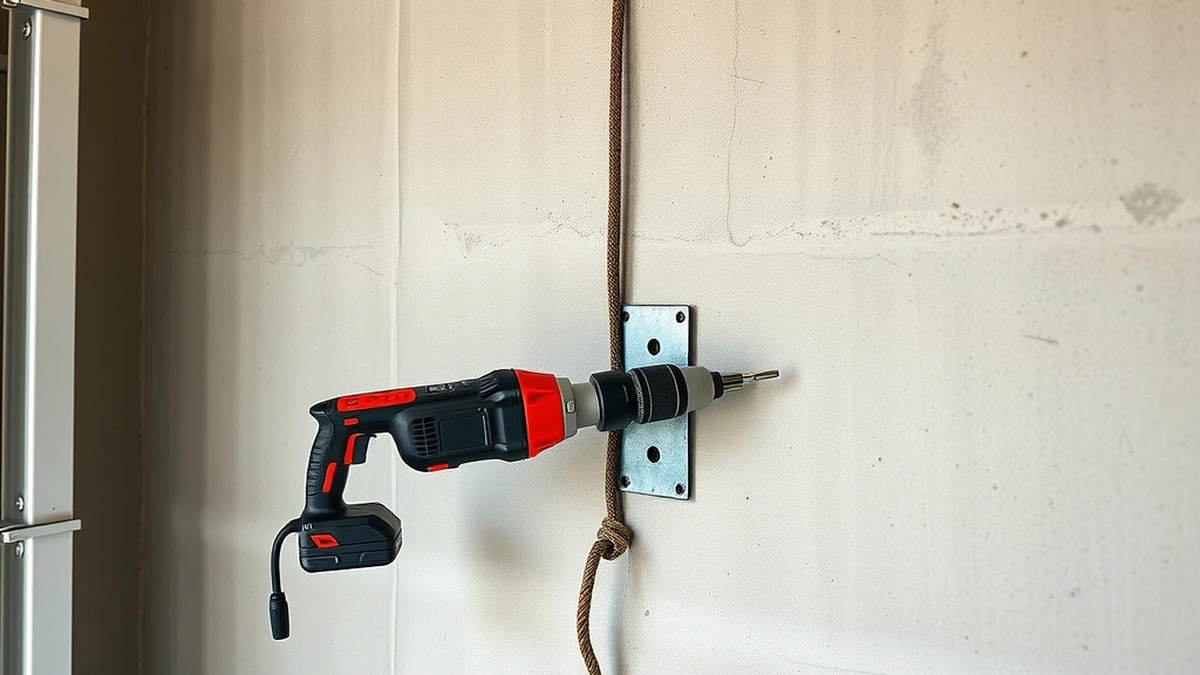
Use sleeve anchors or wedge anchors rated for the load, drill into solid concrete with a hammer drill, and never mount heavy garage storage to drywall alone.
- Best anchor type for medium loads
- Sleeve anchors
- Best anchor type for heavy loads
- Wedge anchors
- Typical embedment depth
- 1.5 to 2.5 inches
- Minimum concrete thickness
- 4 inches
- Approximate cost per anchor
- $1.50 to $4.00
Some links on this page are affiliate links.If you buy through them we may earn a commission at no extra cost to you. We do not accept payment for rankings. Read the full disclosure.
Concrete wall anchors are mechanical fasteners designed to secure objects to solid masonry. In a garage, they are commonly used to attach shelving brackets, cabinet rails, wall organizers, and storage hooks to foundation or block walls. The right anchor depends on the load, the concrete condition, and whether the wall is poured concrete or concrete block.
Start with the load, not the product. Weigh the heaviest item you plan to store, then add the weight of the shelf or cabinet itself. If you are mounting a 40-pound cabinet and plan to fill it with 120 pounds of tools and fluids, the anchor system must handle at least 160 pounds per attachment point, plus a safety margin. Most garage projects use 3/8-inch or 1/2-inch anchors, but the concrete’s compressive strength and thickness matter just as much as the anchor diameter.
Never hang loads from drywall. If your garage has finished walls, locate the concrete or masonry behind the drywall before drilling. Drywall alone cannot support garage storage, and anchors installed only in gypsum will pull out under weight.
Anchor Types for Garage Walls
Mechanical concrete anchors expand against the inside of a drilled hole to create friction and compression. The two most common types for garage storage are sleeve anchors and wedge anchors.
Sleeve anchors consist of a threaded bolt, a nut, a washer, and an expandable sleeve. When you tighten the nut, the sleeve pulls upward and grips the wall of the hole. They work well in both concrete and block, and they are removable if you need to relocate a shelf later.
Wedge anchors are threaded studs with an expansion clip near the bottom. Tightening the nut pulls the stud upward and wedges the clip against the concrete. They generally provide higher pull-out strength than sleeve anchors in solid concrete, but they are harder to remove and not recommended for hollow block unless the block is filled with grout.
Drop-in anchors and epoxy anchors exist for specialized applications, but they add cost and installation time without a clear benefit for typical garage shelving or cabinet rails.
Choosing the Right Diameter and Embedment
Anchor diameter and embedment depth determine how much weight the fastener can hold. A 1/4-inch sleeve anchor embedded 1 inch into concrete might hold a light wall organizer, while a 1/2-inch wedge anchor embedded 2.5 inches is better suited for a heavy cabinet or overhead storage bracket.
Concrete thickness also matters. If your garage foundation wall is only 3 inches thick, a deep embedment could drill through the other side. Most residential garage walls are at least 4 inches thick, but verify before you select anchor length.
Use this arithmetic as a starting point, not a guarantee. If a shelf holds 100 pounds and you use four anchors, each anchor carries roughly 25 pounds. Select anchors rated for at least 50 pounds each to build in a safety margin. Concrete condition, age, and psi all affect actual performance, so treat manufacturer load ratings as the authoritative limit.
Installation Steps
Installing concrete wall anchors requires a hammer drill, carbide masonry bits, a vacuum or compressed air, a wrench or socket, and the anchors themselves.
- Mark the mounting locations on the wall. Check for pipes or electrical conduit behind the concrete before drilling.
- Select a masonry bit that matches the anchor diameter exactly. A hole that is too large reduces holding power; a hole that is too small prevents installation.
- Set the hammer drill depth stop or mark the bit with tape so you drill to the required embedment depth plus 1/4 inch for dust clearance.
- Drill straight into the concrete. Do not angle the bit, since angled holes reduce anchor capacity.
- Clean the hole thoroughly. Dust left in the hole prevents the anchor from seating correctly and lowers load capacity.
- Insert the anchor and tighten the nut to the manufacturer’s torque specification. Over-tightening can strip the anchor or crack the concrete.
- Attach the shelf bracket, cabinet rail, or organizer and test the installation with a light load before adding heavy items.
Cost Arithmetic
Concrete wall anchors are inexpensive compared to the storage they support. A box of 25 zinc-plated 3/8-inch sleeve anchors typically costs between $35 and $90, depending on length and finish, which works out to roughly $1.40 to $3.60 per anchor. Stainless steel anchors cost more, often $3 to $6 each, and are only necessary in garages with high moisture or salt exposure.
For example, mounting a 6-foot garage cabinet with four anchor points at $2.50 per anchor adds $10 to the project cost. If you need epoxy and a dispensing gun for a heavy-duty installation, materials could add $40 to $80. These are estimates based on typical retail pricing; actual costs vary by region and supplier.
Load Distribution and Wall Type
Poured concrete walls offer the most consistent holding power because the material is solid throughout. Concrete block walls are more variable. Anchors installed in the hollow web of a block have far less capacity than anchors installed in the solid face shell or in grout-filled cells. If you are unsure whether your garage wall is poured concrete or block, drill a small pilot hole to check.
Load distribution matters as much as anchor strength. A long shelf loaded unevenly can create a prying force that pulls anchors out at an angle they were not designed to resist. Keep heavy items centered over the support brackets, and avoid cantilevering weight far from the wall.
If you are planning a full garage storage layout, consider how wall anchors fit alongside other systems. Wall-mounted cabinets pair well with floor-based storage to keep heavy items low, while overhead racks require ceiling joist verification rather than wall anchors alone. You can compare storage approaches in our guide to garage cabinets versus shelves, and browse options for wall organizers and overhead garage storage to see how anchors integrate with each system.
Common Mistakes
Using the wrong anchor for the wall material is the most frequent error. Plastic wall plugs designed for drywall or plaster will spin in concrete and provide no meaningful hold. Masonry screws can work for light items, but they are not a substitute for sleeve or wedge anchors under heavy garage loads.
Drilling too close to the edge of a concrete slab or block wall can cause spalling, where the surface chips away and leaves the anchor with little material to grip. Maintain at least 4 to 6 inches from the edge whenever possible, or follow the anchor manufacturer’s edge-distance recommendations.
Skipping hole cleaning is another common problem. Concrete dust acts as a lubricant between the anchor and the hole wall, which can cut holding strength by half or more. Always vacuum or blow out the hole before installation.
Finally, do not exceed the anchor’s rated load just because the concrete feels solid. Age, moisture, and improper curing can reduce concrete strength in ways that are not visible from the surface. When in doubt, use more anchors spaced closer together rather than fewer anchors pushed to their limit.
Maintenance and Inspection
Concrete anchors require little maintenance, but they should be inspected annually in a garage environment. Check for rust, loose nuts, or movement in the bracket. Temperature swings and humidity can cause expansion and contraction that gradually loosens mechanical fasteners. If an anchor shifts or the concrete around it cracks, remove the load and replace the anchor before continuing use.
Painted anchors can hide corrosion, so inspect the area where the washer meets the concrete. If you see rust stains or the anchor spins when you apply light pressure with a wrench, treat it as a failure point.
For broader garage setup planning, including floor storage and DIY installation tips, see our related guides on garage floor storage and DIY garage storage. These resources help you decide where wall-mounted systems fit in the overall layout.
Concrete wall anchors are only as strong as the hole they sit in and the load they carry. Measure first, rate the load second, and choose the anchor that matches both.
Next, compare best garage cabinets, best garage shelving, best garage wall organizer. before you commit.
Frequently asked questions
Can I use drywall anchors in concrete?
No. Drywall anchors are designed for hollow gypsum and will not hold in solid masonry. Use concrete-specific anchors such as sleeve or wedge anchors.
How deep should I drill for concrete wall anchors?
Drill at least 1/4 inch deeper than the anchor embedment depth to allow space for dust, then clean the hole before inserting the anchor.
What weight can a concrete wall anchor hold?
It depends on anchor diameter, embedment depth, and concrete psi. A 3/8-inch sleeve anchor in 3,000 psi concrete may hold several hundred pounds, but always follow the manufacturer rating.
Do I need a hammer drill for concrete anchors?
Yes. A standard drill usually cannot penetrate concrete effectively. Use a hammer drill with a carbide masonry bit matched to the anchor diameter.
Can I mount overhead garage storage to a concrete wall?
Only if the wall and anchors are rated for the full load, including dynamic weight. For ceiling-mounted racks, verify joist capacity first; see our overhead storage guide.
Should I use epoxy anchors in a garage?
Epoxy anchors work for very heavy or critical loads, but they require curing time and precise hole cleaning. Mechanical anchors are usually sufficient for garage shelving.
Sources
Some links are affiliate links.If you buy through them we may earn a commission at no extra cost to you. We do not accept payment for rankings. Read the full disclosure.