Garage floor storage that stays dry
Pallets, floor racks, and sealed bins keep gear off a wet slab. How slope, drainage, flood risk, and pests decide what survives winter.
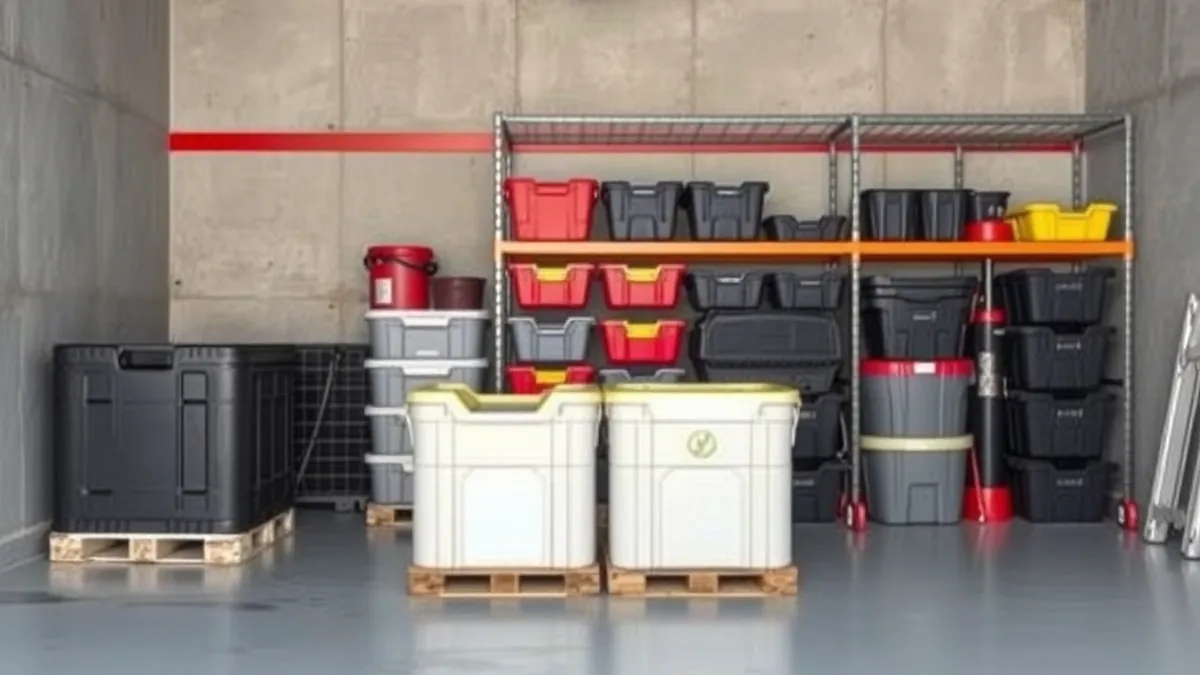
Keep floor storage 4 to 6 inches off the slab on plastic pallets or a rack, leave a 2-inch gap at the wall, and use gasketed bins for anything that absorbs moisture. Slope, drainage, and the flood line set the height.
- Minimum lift off slab
- 4–6 in on pallets or a rack
- Wall gap
- 2 in for airflow and inspection
- Typical slab slope
- 1/8 in per foot toward the door
- Best bin
- Gasketed lid with a latch
- Flood rule
- 6 in above the historic high-water mark
Some links on this page are affiliate links.If you buy through them we may earn a commission at no extra cost to you. We do not accept payment for rankings. Read the full disclosure.
A garage floor is a slab of concrete in contact with the ground, and it behaves like one. Water moves through it, condenses on it, and runs across it toward the door. Floor storage that stays dry is a matter of height, airflow, and a lid that seals.
Floor storage means anything that rests on or within a few inches of the slab: pallets, floor racks, carts, bins, and the bottom shelf of a shelving unit.
Why garage floors get wet
Concrete is porous. A slab poured without a vapor barrier under it will pass ground moisture upward, and the evidence is often a white powder called efflorescence, or a dark patch that never quite dries.
The other sources are more obvious. Snow and rain drip off the car, downspouts discharge near the door, a water heater or laundry connection leaks, and humid summer air condenses on a slab that stays cooler than the room.
None of that requires a flood. A damp slab is enough to ruin cardboard, soften particleboard, and start mold on a sofa cushion over one season.
Look outside as well. A downspout that ends at the foundation, or soil that slopes toward the slab, sends water under the door all winter. Extending the downspout 6 ft away from the house is cheaper than replacing everything on the floor.
The slope rule and the wall gap
Garage slabs are usually sloped toward the door at about 1/8 inch per foot so water can leave. Over a 20 ft depth, that is 2.5 inches of fall.
Check yours with a 4 ft level. A 1/2 inch gap under one end is about 1/8 inch per foot. If water pools in the middle, the slope has failed or the slab has settled, and floor storage in that spot will sit in water.
Leave a 2 inch gap between storage and the wall. The gap lets air move, gives you a place to look for moisture and droppings, and keeps a leaning stack from pressing on the drywall.
Floor storage options compared
| Option | Height off slab | Best for | Moisture behavior |
|---|---|---|---|
| Wood pallet | 5–6 in | Heavy bins, seasonal gear | Wicks water, needs heat-treated lumber |
| Plastic pallet or riser | 4–6 in | Damp slabs, wash-down areas | Does not wick, easy to clean |
| Adjustable floor rack | 6–12 in at the bottom shelf | Boxes, totes, paint | Airflow below, needs assembly |
| Wheeled cart | 4–6 in | Tools, project supplies | Rolls into water, lock the casters |
| Gasketed tote | 0 in, or 4 in on a riser | Soft goods, paper, clothes | Seals, but floats and tips in a flood |
| Wall-leaning shelf | 12 in or more at the base | Long items, lumber | Keeps gear up, must be anchored |
The rack wins for most garages because it combines height, airflow, and a place to sweep under. Pallets are cheaper and faster but harder to inspect.
Pallets: cheap, but not all of them
Free pallets are everywhere, and most are softwood. Look for an HT stamp, which means heat treated. MB means methyl bromide, a fumigant that is restricted in many places; skip those for storing household goods.
Reject any pallet with stains, chemical odors, or boards that flex underfoot. A pallet that collapses under a stack of bins is worse than no pallet, because it takes the stack down with it.
Plastic pallets cost more and last longer in a damp garage. They do not harbor termites, they rinse clean, and a 4 inch height is enough for airflow.
Bins, lids, and desiccant
A gasketed lid with a latch is the difference between a bin and a bucket. Snap lids shed dust; gaskets keep humid air out.
Rechargeable desiccant canisters help in closed bins. The indicator beads change color when saturated, and most canisters recharge in an oven on low heat. Follow the canister’s instructions rather than guessing at the temperature.
Label each bin on two sides with contents and the date it was packed. Do not seal anything damp, and do not store cardboard inside a bin as a liner; it holds moisture against the contents.
Keeping the car and the storage apart
Measure the parking envelope with the car in its usual spot. Most cars are 5 to 6 ft tall, and the door swing plus a 3 ft walkway consumes more floor than owners expect.
Mark the envelope on the floor with tape. Keep floor storage behind that line, and put the tallest racks along the wall the driver does not open into.
A wheeled cart is the exception worth planning for. It can live under a bench or shelf and roll out when needed, as long as the casters lock and the cart is shorter than the shelf above it.
Pests and the gap under the pallet
Mice need about a quarter inch to get in, and a pallet provides both shelter and a highway. The gap that makes storage dry also makes it inspectable.
Pull the front row out once a month and look for droppings, nesting material, and chew marks on bin corners. Snap traps set along the wall, where rodents travel, work better than repellents. Keep traps away from pets and children.
Cardboard is the other invitation. It absorbs moisture, softens, and gives pests a place to chew. Plastic bins cost more and remove the problem.
Flood risk and what to raise
Find the historic high-water mark before you decide how high to build. A garage that has never flooded can still take on 2 inches from a blocked drain or a failed sump.
Raise the bottom shelf at least 6 inches above that mark, and keep documents, photos, and electronics out of the garage entirely. A plastic tote is not waterproof in a flood; it floats, tips, and takes on water through the lid.
If the garage has a floor drain, keep it clear. If it has a sump pump, test it before the wet season and add a battery backup. Flood insurance for garages often needs a separate rider, so ask before the water arrives.
The short version
Lift everything 4 to 6 inches, leave 2 inches at the wall, use gasketed bins, and keep the parking envelope taped off. Prefer plastic over wood in a damp garage, and raise the bottom shelf above the flood mark.
The small garage guide covers layouts when floor space is the constraint. Ceiling height matters too: a rack needs room above it to load, and the low-ceiling guide covers shallow alternatives. The storage safety checklist adds the load, ladder, and chemical checks that go with any floor system.
Frequently asked questions
Should garage floor storage sit on pallets?
Yes if the slab shows any moisture. A plastic pallet or a floor rack lifts bins 4 to 6 inches off the concrete, lets air move underneath, and makes leaks visible before the contents are ruined.
How do I check the slope of a garage floor?
Set a 4 ft level on the slab and measure the gap at one end. A 1/2 inch difference over 4 ft is about 1/8 inch per foot. A cup of water poured at the back should travel toward the door.
Can cardboard boxes sit directly on a concrete floor?
No. Cardboard wicks moisture from the slab, softens, and gives pests a place to nest. Use plastic bins or a rack with a bottom shelf at least 6 inches off the floor.
What floor storage works in a one-car garage?
A narrow floor rack along one wall plus a wheeled cart that tucks under a shelf. Keep the parking envelope clear and move long-term items to the wall rather than the floor.
How high should storage be above a flood line?
At least 6 inches above the highest water you have seen or the local flood map indicates. If the garage has flooded before, raise the bottom shelf to that mark and keep documents out of the garage entirely.
Do wood pallets attract termites or mice?
Wood pallets can shelter both, especially when stored against a wall on a damp slab. Heat-treated pallets are safer than chemically treated ones, and plastic pallets avoid the issue.
Sources
Some links are affiliate links.If you buy through them we may earn a commission at no extra cost to you. We do not accept payment for rankings. Read the full disclosure.