Rental-friendly garage storage
No-drill garage storage for renters: freestanding racks, tension poles, removable adhesive limits, landlord permission, and how to move it all.
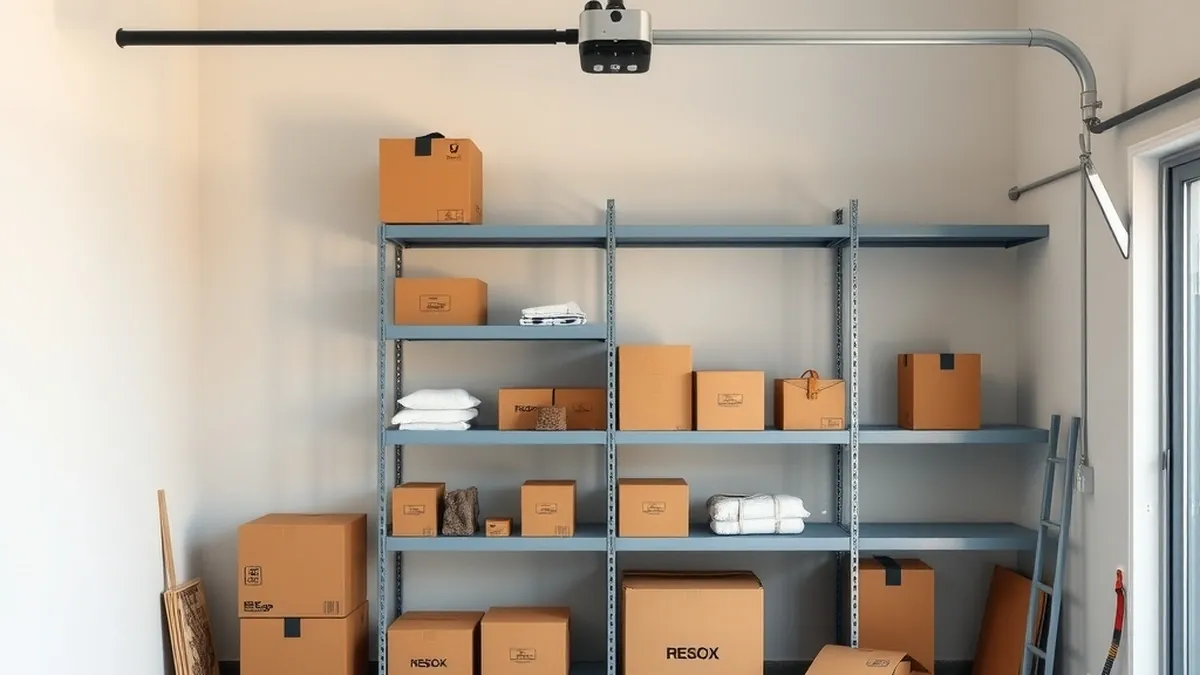
Freestanding steel shelving is the best rental-friendly garage storage: no wall holes, real load capacity, and it moves with you. Use tension poles for bikes and ladders, and adhesive hooks only for light items.
- Best overall
- Freestanding steel rack
- Best for bikes and ladders
- Floor-to-ceiling tension pole
- Lowest damage risk
- Freestanding rack, no wall contact
- Highest risk
- Ceiling-mounted overhead rack
- Permission
- Get written approval before drilling
Some links on this page are affiliate links.If you buy through them we may earn a commission at no extra cost to you. We do not accept payment for rankings. Read the full disclosure.
Freestanding steel shelving is the best rental-friendly garage storage. It needs no wall holes, carries far more than adhesive hooks, and comes apart for the next move. Tension poles are the no-drill option for bikes and ladders; adhesive hooks are for light items only, and overhead ceiling racks are the wrong choice for a rental.
Rental garage storage is any storage system that can be installed without permanent changes, or with changes the landlord has approved and the tenant can reverse at move-out.
Get permission before you buy
Read the lease before you buy anything. Many leases prohibit holes in walls or require the tenant to restore the wall at move-out. Some allow picture hooks but not anchors. Check that the garage is covered by the same language; leases often focus on living space.
Ask for approval in writing. State what you want to install, how many holes it needs, the fastener size, and what you will do at move-out. A short email and a reply is usually enough. Keep it with the lease so a future property manager cannot dispute it.
Ask about insurance too. Renter’s insurance may cover your belongings; check whether it also covers accidental damage to the building. If a shelf pulls out of a wall and dents a car, the liability question matters.
If the landlord says no holes, believe them. A deposit is easier to keep than to recover.
No-drill options that actually hold
Freestanding shelving is the workhorse. A welded steel rack sits on the floor, carries 650 to 2,500 pounds per shelf depending on the model, and needs no contact with the wall. Load the heavy items on the bottom, keep the top shelf for light bins, and leave the unit free of wall straps if the lease forbids holes. If the lease allows one small hole, an anti-tip strap into a stud is worth it.
Tension poles brace between the floor and ceiling. They are useful for bikes, ladders, and long-handled tools in a narrow bay, and they leave no holes. The load goes into the ceiling, so the ceiling substrate matters as much as the pole.
Wall-leaning racks are another no-hole option for ladders and lumber. They rely on a wide floor foot and a padded wall contact. They are stable only when loaded evenly and placed on a level patch of floor.
Adhesive hooks are the last resort. They hold cords, small hand tools, and lightweight bins, not shelving, bikes, or anything overhead. See the limits below before you trust one.
For heavy loads, a freestanding rack is still the answer; compare capacities in best garage shelving.
The damage-risk table
| Option | Holes in the wall | Typical load | Damage risk | Best for |
|---|---|---|---|---|
| Freestanding steel rack | None | 650 to 2,500 lb per shelf | Low; floor scuffs, tip risk if top-heavy | Totes, tools, bulk goods |
| Freestanding resin unit | None | 66 to 150 lb per shelf | Low; can bow under heat | Light bins, seasonal items |
| Floor-to-ceiling tension pole | None | Light to moderate; check the pole rating | Low to medium; ceiling marks | Bikes, ladders, long tools |
| Wall-leaning ladder rack | None | Light to moderate | Low; wall scuffs | Ladders, lumber, pipe |
| Removable adhesive hook | None | A few pounds | Medium to high; paint pull | Cords, small tools |
| Single rail into studs | Two to four per rail | Up to 1,750 lb per rail, per manufacturer | Low; small patches | A renter allowed to drill |
| Slatwall panels | Many | 50 to 75 lb per sq ft | Medium; larger patches | A long lease with approval |
| Ceiling overhead rack | Many | Varies by structure | High; ceiling repair | Not recommended for rentals |
Where a number is given, it is a published capacity for a representative product, not a promise about your wall or ceiling. The damage column assumes careful removal; a rushed removal can turn a low-risk item into a drywall repair.
Tension poles and rails
A tension pole is a spring-loaded column with a rubber foot at the floor and a padded plate at the ceiling. Turning the collar extends the pole until it presses against both surfaces. Friction and pressure hold it in place; no fasteners are required.
That design has two limits. First, the ceiling must be sound. A pole under a drywall ceiling spreads its load over a small plate, and a damaged or water-stained ceiling can crack. Second, the pole must be vertical and on a level floor. A garage slab slopes toward the door, so check the pole with a level and adjust the foot.
Tension rails work the same way horizontally between two walls, but they are less common in garages because the span is usually too wide. A rail rated for a closet is not a bike rack.
Never use a tension pole under a suspended ceiling, a drop ceiling, or a ceiling with recessed lights nearby. If you need overhead storage in a rental, ask the landlord about a professionally installed rack, and expect to leave it behind.
What removable adhesive will and will not hold
Removable adhesive strips are rated by the manufacturer for a specific weight on a specific surface. Those ratings assume a clean, smooth, sealed wall at room temperature. A garage wall is often none of those things.
Dust is the main failure. Adhesive cannot bond to a chalky painted surface or a concrete block wall. Humidity and summer heat soften the adhesive, and cold makes it brittle. The strip may hold for weeks and let go on the first hot day.
Paint is the second failure. On a poorly bonded coat, the adhesive can pull the paint film off the drywall when you remove it. That is a repair, not a clean removal.
Use adhesive hooks for items under a few pounds, mount them at eye level or below, and never hang anything that would break or hurt someone if it fell. For anything heavier, use a freestanding rack or a tension pole.
Design it to move
Buy units that disassemble with a rubber mallet or a few bolts. Boltless steel racks knock down flat, and wire shelving breaks into posts, shelves, and clips. Keep the instructions and the hardware bag taped to the back of the unit.
Measure the next garage before you buy. A 77-inch rack that fits the current wall may not fit a narrower one-car garage. Adjustable shelves help, but the footprint is fixed.
At move-out, remove anchors, patch the holes, and touch up the paint. Keep a labeled paint sample from move-in; matching a garage wall is easier with the original can than with a color chip. A $50 to $150 patch and paint job protects a deposit that may be several hundred dollars.
If you are staying put but the garage is tight, the layout advice in garage storage for small garages applies to rentals too. If you are allowed to drill, a garage wall organizer adds storage without eating floor space.
The short version
Renters should start with a freestanding steel rack, add a tension pole for bikes and ladders, and use adhesive hooks only for light items. Get written permission before any hole, keep the hardware, and plan the move-out repair. The best rental storage is the storage you can take with you.
For the cost of each option, including the repair line items, see garage storage costs. For load ratings on the racks themselves, use best garage shelving.
Frequently asked questions
Can renters install garage shelves without drilling?
Yes. Freestanding steel or resin shelving needs no wall holes, and floor-to-ceiling tension poles hold bikes and ladders by pressure. Removable adhesive hooks work for light items, but they are not reliable on dusty or freshly painted garage walls and should never carry a shelf.
Are tension poles strong enough for bikes and ladders?
It depends on the pole and the ceiling. Check the pole's published capacity before loading it; the load transfers to the ceiling, so a damaged or suspended ceiling is a poor mounting point. Keep the load light and centered over the pole.
Do removable adhesive hooks work in a garage?
Only for light items and only on a clean, smooth, sealed surface. Garage dust, humidity, and temperature swings weaken the adhesive, and the hook can pull paint when removed. Keep them under a few pounds and away from anything overhead.
What does a landlord need to approve for garage storage?
Ask in writing before you drill. Specify the number and size of holes, what will be installed, whether you will patch and paint at move-out, and whether the improvement stays. Keep the approval with your lease. If the answer is no, use freestanding storage.
How do I patch anchor holes before moving out?
Remove the anchors, fill the holes with lightweight spackle or a setting compound, sand smooth, and touch up the paint. For larger holes, use a patch and matching paint. Save a sample of the wall paint at move-in so the repair blends.
What is the best garage storage for a rental?
A freestanding steel rack with adjustable shelves and a second, smaller resin unit for light bins covers most renters. Add a tension pole for bikes and a wall-leaning ladder rack if the lease forbids holes. Keep the receipt so you can move or resell the units.
Sources
Some links are affiliate links.If you buy through them we may earn a commission at no extra cost to you. We do not accept payment for rankings. Read the full disclosure.