
Safety guides
Load ratings, anchors, overhead clearance, and inspection.
Overhead storage starts with the ceiling, not the rack
Most garage ceilings in the U.S. are 8 to 9 feet high; anything under 7 feet is a low ceiling. Before you mount anything overhead, know what the framing can carry. A typical finished garage ceiling is rated for a dead load of 10 to 20 pounds per square foot. That number covers the ceiling itself, not your bins, tools, or holiday decorations. Spread weight across multiple joists, and never exceed the rating for a single span just because the rack feels solid.
Anchoring matters as much as the rating. Lag screws into solid wood joists are the minimum standard; toggle bolts in hollow space or screws into drywall alone will fail under load. Never hang anything from drywall. If you cannot locate joists with a stud finder or by measuring from a known edge, stop and open a small inspection hole or call someone who can. The difference between a secure rack and a collapsed one is usually the anchor, not the shelf.
Read how to read garage joist load ratings, measure spans, and estimate safe overhead storage weight.
Clearance, door tracks, and what never goes overhead
Overhead racks usually drop 10 to 24 inches from the ceiling. On an 8-foot ceiling, that leaves roughly 6 to 7 feet of headroom. A standard garage door track occupies 6 feet 8 inches to 7 feet of vertical space near the opening, and most passenger cars are 5 to 6 feet tall. If your rack intrudes into the door track or swings over the hood, one open door or one tall SUV can turn stored items into falling hazards.
| Item | Typical dimension | Overhead verdict |
|---|---|---|
| Standard garage ceiling | 8–9 ft | Usable with 10–24 in rack drop |
| Low ceiling | 7 ft | Very tight; verify door track clearance |
| Door track height | 6 ft 8 in–7 ft | Keep racks clear of the track path |
| Passenger car height | 5–6 ft | Do not store directly over the hood or roof |
| Ceiling dead load | 10–20 psf | Do not exceed joist or rack rating |
What never goes overhead: propane tanks, gasoline, paint thinner, aerosol cans, car batteries, and anything corrosive or under pressure. Heat collects near the ceiling, and a leaking container dropped from above is worse than one spilled on the floor. Ladders can live overhead only if they are secured so they cannot slide, and only where they will not block the door or land on a vehicle. Heavy, awkward, or frequently used items belong on wall hooks or floor shelving, not above your head.
Inspect twice a year, and know when to stop
Overhead storage is not install-and-forget. Inspect racks, anchors, and joist connections twice a year—ideally spring and fall. Look for sagging shelves, screws backing out, rust at connection points, and new cracks in the drywall above the rack. A rack that was level when installed but now tilts even an inch is telling you the load has shifted or an anchor has loosened. Lower the weight immediately and re-anchor before adding anything back.
If you find rot, termite damage, a cut joist, or a rack pulling away from the ceiling, do not add more fasteners as a temporary fix. Remove the stored items, take the rack down, and have the framing assessed. The same applies if you are unsure whether your ceiling can hold the weight you want to store. A short visit from someone who can read span tables is cheaper than replacing a damaged car—or repairing an injury.
FAQ
How much weight can my garage ceiling hold?
Most finished garage ceilings carry a dead load of 10 to 20 pounds per square foot, but the safe limit for your racks depends on joist size, span, spacing, and how they are anchored. Calculate per joist, not per rack.
Can I mount an overhead rack to drywall?
No. Never hang storage from drywall alone. Fasten into solid wood joists or blocking, and verify the anchor before loading the rack.
What should I never store overhead?
Propane, gasoline, solvents, aerosols, batteries, corrosives, and anything under pressure. Keep heavy or frequently used items on the floor or wall, where a fall cannot damage a car or injure someone.
A ten-minute load checklist
Before a single bracket goes up, run this check with a stud finder, a tape measure, and a flashlight. It catches most of the mistakes that lead to sagging racks and cracked ceilings.
- Find the joists and mark their direction and spacing. Sixteen inches on center is common; twelve and twenty-four exist.
- Measure the span and note any splices, notches, or previous repairs. A notched joist is weaker than the nominal size suggests.
- Look for water stains, rusted fasteners, and sagging. These are signs of a problem that storage will make worse.
- Add up the load: rack weight plus the weight of everything you plan to put on it.
- Divide by the rack's square footage to get pounds per square foot, then compare that with the ceiling's estimated dead-load capacity.
- Confirm the anchors match the framing: lag bolts into solid wood, not drywall anchors, and the manufacturer's specified diameter and length.
- Check clearance above the car and the door track with the door fully open.
- Inspect the installation after the first week, then twice a year.
The pounds-per-square-foot step is the one most people skip. A 600 lb rack spread over 32 square feet adds about 19 psf, which can be most of the spare dead load in a lightly framed garage ceiling. Distribute the weight, keep heavy bins over the joists, and never concentrate a single 200 lb box in one corner.
All safety guides
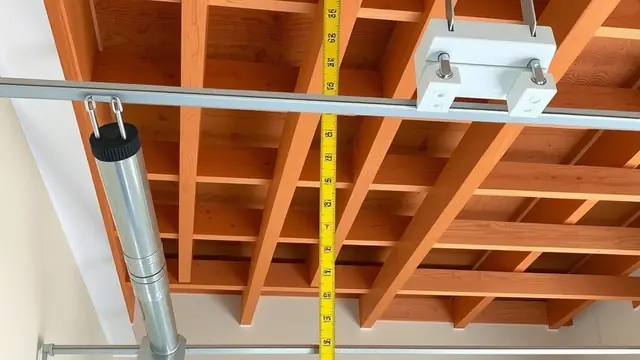
Garage Joist Load Rating Explained
How to read garage joist load ratings, measure spans, and estimate safe overhead storage weight before installing racks.
Read the guide →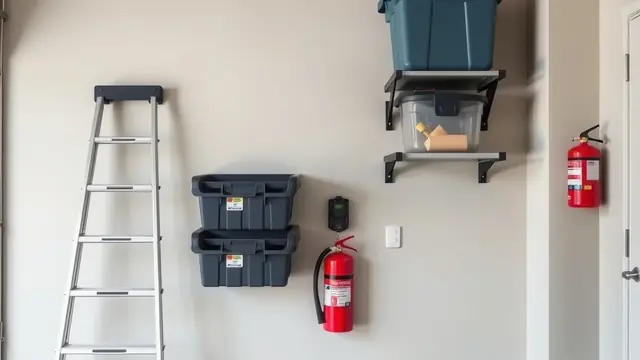
Garage storage safety checklist
Twelve checks for overhead racks, anchors, ladders, chemicals, and clearance, plus what to inspect twice a year and when to call someone.
Read the guide →