Gladiator GearWall review
A specification review of Gladiator GearWall: 12-inch panels, 50 lb per square foot, hook limits, installation, and the real cost per linear foot.
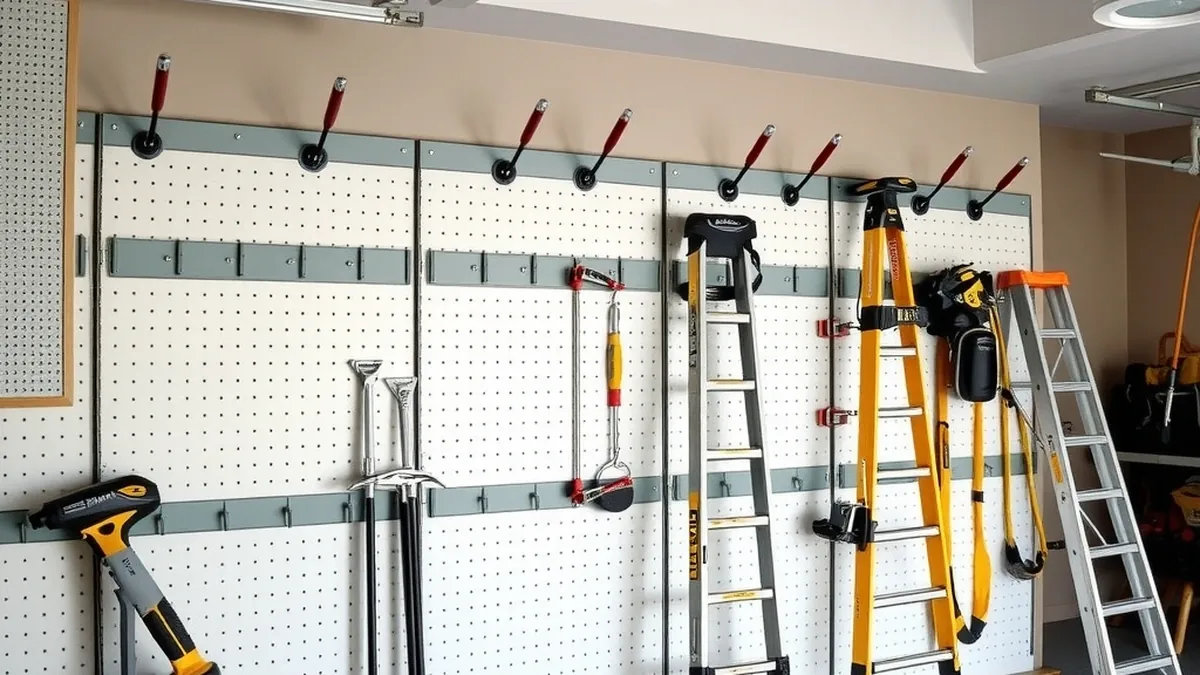
GearWall is a 12-inch slatwall panel rated 50 lb per square foot and sold in 4- and 8-foot two-packs. It is excellent for tools and bikes on a stud wall; add hooks and the cost lands around $14 to $18 per linear foot.
- Panel
- 12 inches tall, 0.75 inch deep, 4 or 8 feet wide
- Panel rating
- 50 pounds per square foot, distributed
- Hook rating
- 50 pounds per utility hook
- Panel cost
- $8.12 to $8.75 per linear foot
- With hooks
- About $14 to $18 per linear foot
Some links on this page are affiliate links.If you buy through them we may earn a commission at no extra cost to you. We do not accept payment for rankings. Read the full disclosure.
Gladiator GearWall is a full-wall slatwall system, not a track. The panels are 12 inches tall and 0.75 inch deep, sold in 4- and 8-foot two-packs, and rated at 50 pounds per square foot when screwed into studs. The concept is strong; the cost is in the hooks.
This is a specification review of Gladiator’s published dimensions, ratings, installation requirements, and prices, not a hands-on report.
What GearWall actually is
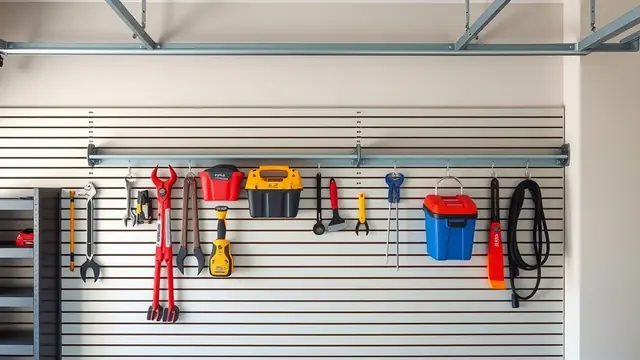
GearWall is a set of interlocking steel panels with horizontal grooves that accept Gladiator hooks, baskets, bins, and shelves. The panels are 12 inches tall, so a single row covers one foot of wall height; stack rows to cover more. The 4-foot panel is 48 inches wide, the 8-foot panel is 96 inches wide, and both are 0.75 inch deep.
The panels have a tongue-and-groove edge, so adjacent panels join into a continuous run. Gladiator also sells trim for inside corners, outside corners, and exposed edges. The finish is powder-coated, and the company says it is built to withstand heat, cold, and humidity.
GearWall is different from GearTrack, Gladiator’s narrow channel. GearTrack is a rail; GearWall covers the wall between the rails. Both accept the same accessory family, but GearWall gives you more mounting positions and hides more of the wall. If you want a wall that can be reconfigured without patching holes, GearWall is the more flexible surface.
The load rating, read correctly
Gladiator rates GearWall at 50 pounds per square foot. That is a distributed load, not a total for the panel and not a license to hang a point load.
Run the arithmetic. A 4-foot by 1-foot panel is 4 square feet, so 50 pounds per square foot gives 200 pounds evenly distributed. An 8-foot panel is 8 square feet, or 400 pounds evenly distributed. Those numbers assume the panel is fastened to studs along its length and the load is spread across the surface.
Hooks change the math. Gladiator’s utility hook is rated at 50 pounds per unit. A 100-pound ladder on two hooks is at the combined hook limit with no reserve, even though the panel underneath could theoretically carry 200 pounds. The panel is not the weak link in that scenario; the hook is.
This is why GearWall works best for tools, bikes, cords, helmets, and garden implements, and poorly for loaded storage totes. If you need to hang 100 pounds from one point, use a cabinet, a shelf with two brackets, or an overhead rack rated for the load. The overhead storage weight guide explains the ceiling side of that decision.
Installation: studs, level, and two people
GearWall screws through the panel into wood studs. Gladiator says it can mount on bare wood studs or on drywall over wood studs. It cannot be anchored to drywall alone, and it is not a concrete or masonry product without a separate anchoring plan.
Find the studs first. At 16 inches on center, a 4-foot panel crosses four studs and an 8-foot panel crosses seven. Mark a level line at the top of the panel, because a 16-foot run that is 1/4 inch out of level is visible at the end.
The panels are light, but the 8-foot panel is awkward for one person; two people make the first row faster. Use the included color-matched screws and do not overtighten; the panel should sit flat, not dimple around each screw.
Stack additional rows directly above the first, engaging the tongue-and-groove edge. Check the manufacturer’s instructions for the required screw pattern at seams and ends. For a wall with steel studs, concrete, or furring, stop and have a professional specify the attachment.
Hooks and the real cost per linear foot
The panel price is only the entry ticket. Hooks, baskets, and trim are separate, and a useful wall needs more than two hooks.
| 16-foot run | Parts | Cost | Per linear foot |
|---|---|---|---|
| Panels only | One 8-foot two-pack | $129.99 | $8.12 |
| Six hooks | Panels plus 6 utility hooks at $15 | $219.99 | $13.75 |
| Eight hooks | Panels plus 8 utility hooks at $15 | $249.99 | $15.62 |
| Eight hooks, higher price | Panels plus 8 hooks at $20 | $289.99 | $18.12 |
Prices use Gladiator’s listed panel price and a typical $15 to $20 street price for a utility hook. Trim adds roughly $55 for a six-pack, which is why the finished wall often lands above the panel-only number.
One trap: the 8-foot panels are sold in a two-pack, so an 8-foot wall still requires buying 16 linear feet of panel. If you use only one panel, the effective panel cost for that wall is about $16.25 per linear foot, not $8.12.
For a rail-based alternative, see Rubbermaid FastTrack vs Gladiator; the trade-off is full-wall coverage versus a lower entry cost.
Who it suits
GearWall suits a garage with at least one long, clear stud wall and a collection of items that hang rather than stack. It fits a workshop, bike corner, garden wall, or any garage with bare studs.
It is a poor fit for renters who cannot put screws into studs, for masonry walls without a proper anchoring plan, and for anyone who needs enclosed storage. GearWall is open; everything on it collects dust.
If you are choosing among wall systems, the best garage wall organizer comparison covers slatwall, pegboard, rails, and hybrid panels. If the garage is small, the small garage storage guide shows how much wall coverage is worth the cost.
Pros and cons
Pros
- 50 pounds per square foot distributed capacity is high for a wall panel.
- Full-wall coverage hides the wall and gives near-continuous mounting positions.
- Gladiator’s accessory line is broad and designed to clip in and move.
- No assembly; the panel is a single piece.
- Powder-coated finish is appropriate for an unheated garage.
Cons
- Panels are sold in two-packs, which forces extra linear footage on small walls.
- Hooks, baskets, and trim push the installed cost well above the panel price.
- Each row covers only 12 inches of height, so a full wall needs several rows.
- The 50-pound hook limit is easy to exceed with a loaded bin.
- Installation requires studs and a level line; drywall alone is not acceptable.
Verdict
| Question | Answer |
|---|---|
| Best for | Tools, bikes, ladders, cords, and garden gear on a stud wall |
| Not for | Heavy bins, single-point loads over 50 pounds, masonry without a plan |
| Panel size | 12 inches tall, 0.75 inch deep, 4 or 8 feet wide |
| Published capacity | 50 pounds per square foot distributed; 50 pounds per utility hook |
| Cost | About $8.12 to $8.75 per linear foot for panels; $14 to $18 with hooks |
| Verdict | A strong full-wall system if you have studs and accessories; not the cheapest way to hang a few tools |
GearWall is worth the money when you use the wall, not when you buy two panels and stop. Price the hooks with the panels, count the linear feet you will actually cover, and keep point loads under the hook rating. If you need to hang a 100-pound item from one spot, this is the wrong product; if you need a wall that can be reorganized every season, it is one of the better systems available.
If the wall framing is unclear or the load feels close to the limit, consult a licensed professional. Anchor into studs, follow the rating, and leave a reserve.
Frequently asked questions
How much weight does Gladiator GearWall hold?
Gladiator rates GearWall at 50 pounds per square foot when installed into studs. A 4-foot panel therefore carries about 200 pounds evenly distributed, and an 8-foot panel about 400 pounds, but a single hook is limited to its own rating.
Can GearWall be installed on drywall?
GearWall can mount over drywall only when the screws reach the wood studs behind it. It cannot be anchored to drywall alone. For concrete, masonry, or steel framing, use a system designed for that substrate or consult a professional.
Does GearWall come in 8-foot panels?
Yes. Gladiator sells 4-foot and 8-foot GearWall panels in two-packs. The 8-foot panel is 96 inches wide, 12 inches tall, and 0.75 inch deep, and the two-pack covers 16 linear feet.
Are GearTrack hooks compatible with GearWall?
Gladiator's wall accessories, including hooks, baskets, and bins, are designed to work across its wall system. Check the accessory package for the GearWall or GearTrack compatibility note before buying a third-party hook.
How much does GearWall cost per linear foot?
The panels alone run about $8.12 to $8.75 per linear foot when you use both panels in a two-pack. With six to eight utility hooks, a 16-foot run lands around $14 to $18 per linear foot before trim.
Is GearWall strong enough for heavy storage bins?
One 30- to 40-pound bin is within a single hook's 50-pound limit, but with little reserve. A 60-pound bin exceeds it, and a stack of bins should go on an overhead rack or in a cabinet instead.
Sources
Some links are affiliate links.If you buy through them we may earn a commission at no extra cost to you. We do not accept payment for rankings. Read the full disclosure.